Blog/Screen time for adults/Explainer
How to Turn Off Notifications on iPhone (and Which Ones to Keep)
Step by step for iOS 27: one app at a time, straight from the Lock Screen, or gathered into a summary, plus the alerts worth keeping.


In this article
To turn off notifications for an app on iPhone, open the Settings app, tap Notifications, tap the app and turn off Allow Notifications. It takes about ten seconds an app, and for most of your apps it's the right call.
The best results come from a quick triage rather than a purge: off for the apps that only want your attention, a scheduled summary for the ones you'd check anyway, and on for people and anything urgent. Here's how to do each on iOS 27, the faster ways most people never find, what the research says about going quiet, and which notifications are worth keeping.
How to turn off notifications for one app
These steps are for iOS 27, and they're the same on iOS 26 [1]:
- Open the Settings app.
- Tap Notifications, then tap the app below Notification Style.
- Turn off Allow Notifications.
The app can no longer alert you in any way until you turn it back on. If you'd rather keep its notifications and tone them down, the same screen lets you [1]:
- Choose where they appear. Under Alerts, pick the Lock Screen, Notification Center, banners or any mix of them. An app left with only Notification Center waits there until you go looking.
- Turn off Badges, the red number on the app's icon that keeps asking to be cleared.
- Keep only some kinds. If the app supports it, tap Customize Notifications to choose which types it may send.
- Go deeper in the app. For some apps, a link at the bottom of the screen opens the app's own notification settings, with more detailed choices.
Two more chances to say no come to you. While you're using an app, your iPhone may ask how you want its notifications: immediately, not at all, or in a scheduled summary. And when you haven't used an app for a while, it may suggest turning that app's notifications off [2]. Take it up on the offer.
The fastest way: from the notification itself
The best moment to deal with an app is right after it interrupts you. On the Lock Screen or in Notification Center, swipe left on its notification, tap Options, then choose to mute the app for an hour or for the day, or tap Turn Off [2].
Muting is the option most people never find. While it lasts, the app's notifications go straight to Notification Center, so they don't appear on the Lock Screen, play a sound, light up the screen or show a banner [2]. They're there when you look, and quiet until you do. To undo it, swipe left on one of them in Notification Center, tap Options, then tap Unmute [2].
To open Notification Center on iOS 27, swipe up from the middle of the Lock Screen, or swipe down from the top-left corner on any other screen. On iOS 26, that second swipe starts from the top center [2].
What going quiet does, and what it doesn't
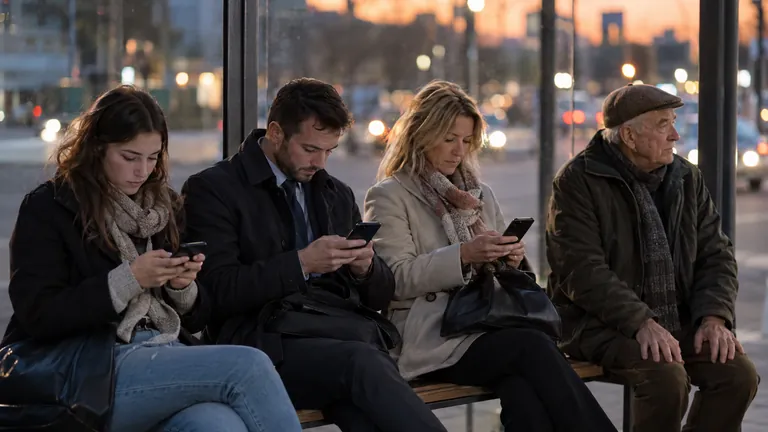
A notification costs attention even when you ignore it. In a lab study, phone notifications alone disrupted performance on a demanding task about as much as taking a call or answering a text did, though the participants never touched their phones during the task [3].
So you'd expect switching everything off to fix the problem. The studies say it helps less than that, and it can backfire:
- A day with no alerts. When 30 volunteers turned off notification alerts on all their devices for 24 hours, they felt less distracted and more productive. They also felt less responsive, worried more about missing something, checked their phones for missed notifications more often and felt less connected to their social group. Their stress didn't change [4].
- Two weeks with none. In a field experiment with 237 phone users, people who got no notifications at all for two weeks were no more attentive than people who got them as usual, and they reported more anxiety and fear of missing out. People whose notifications arrived in three batches a day felt more attentive, less stressed, more productive and more in control of their phones [5].
- A week, measured. A preregistered trial randomly assigned 205 people to disable their notifications for a week or carry on as usual, and logged their phones. Disabling notifications didn't change how often they checked their phones or their screen time, and it raised their fear of missing out. It did make their checking feel more intentional [6].
Why so little change? When researchers recorded people's days from their own point of view, 89% of 1,130 phone interactions were started by the person, and only 11% by a notification [7]. Most of those 37 people kept their phones on silent or out of reach already, and they still reached for the screen about every five minutes [7].
Notifications start fewer of your phone checks than it feels like. Most of them start with you.
So the aim is a middle path: fewer interruptions you didn't choose, the ones you need kept, and a limit for the reaching that starts with you. That last part is where Unrotten comes in.
Batch the rest with Scheduled Summary
Batching is the middle path the research supports. Scheduled Summary collects notifications from the apps you choose and delivers them together, at the times you set [1]:
- Open Settings, tap Notifications, then tap Scheduled Summary.
- Turn on Scheduled Summary, then tap Continue if it appears.
- Schedule the times for your summary.
- Tap A to Z and turn on the apps to include.
Good candidates are apps that deserve a look but not an interruption: news, shopping, most social apps, anything that sends deals. Leave out the apps that bring you messages from people. Later, each app's screen in Settings, under Notifications, offers a Notification Delivery choice between Immediate Delivery and Scheduled Summary, so you can move apps in and out as you learn what you miss [1].

Silence notifications without turning them off
Sometimes you want everything to keep arriving, just not out loud.
Silent mode stops calls, notifications and system sounds from ringing, though your iPhone may still vibrate [8]. On iOS 27, open Control Center and tap the Silent mode button, or go to Settings, then Sounds & Haptics. On models with an Action button, press and hold it; on models with a Ring/Silent switch, flip it toward the back of the phone [8]. Clock alarms, music and many games still play sound in Silent mode [8].
A Focus silences notifications from everyone except the people and apps you allow, and it can turn on by itself at set times. Do Not Disturb is the ready-made one, in Control Center under Focus. Our guide to Focus mode on iPhone shows how to set one up so it actually helps.
Apple Intelligence can sort notifications for you on an iPhone 15 Pro, iPhone 15 Pro Max or iPhone 16 or later [9]. Summarize Notifications condenses them so you can scan the key details. Prioritize Notifications puts the ones that may need you at the top of the stack. And the Reduce Interruptions Focus "shows you only the notifications that might need immediate attention," silencing the rest [9]. The first two are in Settings, under Notifications; the Focus is in Settings, under Focus, behind the add button at the top right [9].
Which notifications to keep
Turning things off is the easy part. Here's what to leave on.
- People. Calls, texts and the chats you'd actually answer. If one busy group chat is the problem, hide its alerts instead of silencing Messages: swipe left on the conversation and tap the bell, or open it, tap the contact or icon at the top and turn on Hide Alerts. You keep getting the messages without the alerts, and senders may see a note that you have notifications silenced [10].
- Anything on a clock. Your calendar and reminders, the ride or delivery you're waiting for, sign-in codes, your bank's fraud alerts. If an app supports it, its screen in Settings has a Time Sensitive Notifications switch for its most urgent alerts [1].
- Safety alerts. In the US, AMBER, Public Safety and Emergency Alerts can be turned on or off, and they're on by default. They sit at the bottom of Settings, Notifications, under Government Alerts, where Always Play Sound lets Emergency Alerts sound even in Silent mode [1]. Leave them on.
Everything else is a candidate for off or for the summary: likes and follows, "we miss you" nudges, streak reminders, sales and recommendations.

A ten-minute cleanup, and what comes after
Open Settings, tap Notifications and go down the list once, asking each app one question: would I want this to interrupt dinner? If not, turn it off. If you'd still like to see it eventually, send it to the summary. Keep the people and anything on a clock. Then leave it alone for a week.
If, a week in, your thumb still finds the same apps with nothing pinging, you've met the habit the research keeps finding, and it needs a different tool from a quieter phone. A daily limit in Unrotten locks the apps you choose once your minutes are used up, behind Apple's Screen Time shield, which has no "ignore limit" button. Its Fewer app returns goal sets a daily target for how many times you open them. You can still turn a goal off, so it's a commitment device rather than a wall.
For the bigger picture, our guides to locking apps on iPhone and reducing your screen time take it from there.
Questions people ask
How do I turn off notifications for an app on iPhone?
Open the Settings app, tap Notifications, tap the app below Notification Style, then turn off Allow Notifications. The steps are the same on iOS 26 and iOS 27. You can also swipe left on one of the app's notifications, tap Options, then tap Turn Off.
What's the difference between muting and turning off notifications on iPhone?
Muting, from a notification's Options, lasts an hour or a day: the app's notifications still go to Notification Center, but they don't appear on the Lock Screen, play a sound, light up the screen or show a banner. Turning notifications off stops the app from notifying you at all until you turn Allow Notifications back on.
How do I silence notifications on iPhone without turning them off?
Turn on Silent mode from Control Center, in Settings under Sounds & Haptics, or with the Action button or Ring/Silent switch, depending on your model. Your iPhone may still vibrate. To silence notifications from everyone except the people and apps you choose, turn on a Focus such as Do Not Disturb.
What is Scheduled Summary on iPhone?
Scheduled Summary collects notifications from the apps you choose and delivers them together at times you set, instead of one at a time through the day. Turn it on in Settings, Notifications, Scheduled Summary, then schedule the times and pick the apps under A to Z.
Does turning off notifications reduce screen time?
Not by itself. In a preregistered 2024 trial, 205 people who disabled notifications for a week didn't check their phones less or cut their screen time, though their checking felt more intentional. Most phone checks start with you, so pair fewer notifications with limits on the apps you open on your own.
References
- Apple. "Change notification settings on iPhone." iPhone User Guide, iOS 27. Accessed November 14, 2026. support.apple.com ↩
- Apple. "View and respond to notifications on iPhone." iPhone User Guide, iOS 27. Accessed November 14, 2026. support.apple.com ↩
- Stothart C, Mitchum A, Yehnert C. "The attentional cost of receiving a cell phone notification." Journal of Experimental Psychology: Human Perception and Performance. 2015;41(4):893-897. doi:10.1037/xhp0000100 · Read our plain-English summary ↩
- Pielot M, Rello L. "Productive, anxious, lonely: 24 hours without push notifications." Proceedings of the 19th International Conference on Human-Computer Interaction with Mobile Devices and Services. 2017:1-11. doi:10.1145/3098279.3098526 ↩
- Fitz N, Kushlev K, Jagannathan R, Lewis T, Paliwal D, Ariely D. "Batching smartphone notifications can improve well-being." Computers in Human Behavior. 2019;101:84-94. doi:10.1016/j.chb.2019.07.016 · Read our plain-English summary ↩
- Dekker CA, Baumgartner SE, Sumter SR, Ohme J. "Beyond the buzz: investigating the effects of a notification-disabling intervention on smartphone behavior and digital well-being." Media Psychology. 2024;28(1):162-188. doi:10.1080/15213269.2024.2334025 ↩
- Heitmayer M, Lahlou S. "Why are smartphones disruptive? An empirical study of smartphone use in real-life contexts." Computers in Human Behavior. 2021;116:106637. doi:10.1016/j.chb.2020.106637 ↩
- Apple. "Silence iPhone." iPhone User Guide, iOS 27. Accessed November 14, 2026. support.apple.com ↩
- Apple. "Summarize notifications and reduce interruptions with Apple Intelligence on iPhone." iPhone User Guide, iOS 27. Accessed November 14, 2026. support.apple.com ↩
- Apple. "Stop, mute, and change message notifications on iPhone." iPhone User Guide, iOS 27. Accessed November 14, 2026. support.apple.com ↩
Written by
Maren AshbyCOO, Unrotten
Maren Ashby is the COO of Unrotten, the iPhone app that helps people take their attention back from the feed. She writes about the research on phones, sleep and focus, and about the small, practical changes that make a phone easier to put down.