Research library/Cohort study
Do Screen Time and Poor Sleep Feed Each Other?

Hugues Sampasa-Kanyinga, Jean-Philippe Chaput and colleagues followed 31,361 UK adults for almost seven years, measuring television and leisure computer time alongside five markers of sleep health at two points years apart. Adults who slept poorly at the first measurement were more likely to be heavy screen users later, and adults who were heavy screen users at the start were more likely to be sleeping poorly later. The two habits moved together in both directions, not just one.
What the researchers did
The study, published in the Journal of Sleep Research in 2023, drew on the UK Biobank, which recruited 502,616 adults aged 40 to 69 across the UK between 2006 and 2010. Participants with at least one repeat assessment of both screen time and sleep between 2012 and 2018, and complete covariate data, were included: 31,361 adults (52% female, mean age 56.1), followed for an average of 6.9 years.
Discretionary screen time (DST) was self-reported hours per day watching TV plus leisure computer use, excluding work, sorted into three groups: low (under 3 hours), medium (3 to 4) and high (over 4). Sleep was also self-reported across five characteristics: a morning chronotype, 7 to 8 hours a night, rare insomnia, rare snoring and infrequent daytime sleepiness; 4 or 5 of these counted as a healthy pattern, 2 or 3 as intermediate, 0 or 1 as poor. Logistic regression tested whether baseline sleep predicted high DST years later, and separately whether baseline DST predicted poor sleep years later, adjusting for age, sex, follow-up time, BMI, deprivation, physical activity, diet quality, shift work, smoking, alcohol use, mental health history, and major cardiovascular or cancer history.
What they found
- At the start, DST averaged 3.7 hours a day: 33% of participants were low, 39% medium and 28% high; only 2% already had a poor sleep pattern, though 37% had a late chronotype and 28% fell short on sleep duration.
- Poor sleep came with more screen time later. Compared with adults who had a healthy sleep pattern at the start, those with an intermediate pattern had higher odds of being a heavy screen user years later (odds ratio 1.40, 95% CI 1.15 to 1.71), as did those with a poor pattern (odds ratio 1.16, 95% CI 1.10 to 1.24).
- Specific sleep problems mattered too. Adults with a late chronotype (odds ratio 1.17), short sleep duration (odds ratio 1.10) or insomnia symptoms (odds ratio 1.10) each had higher odds of heavy screen time at follow-up. Snoring and daytime sleepiness on their own did not reach statistical significance.
- More screen time came with worse sleep later. Compared with the low screen time group, adults with medium DST at the start had higher odds of a poor sleep pattern years later (odds ratio 1.40, 95% CI 1.14 to 1.71), and so did adults with high DST (odds ratio 1.62, 95% CI 1.30 to 2.00).
- Years at a high level mattered most. Compared with adults who kept their screen time low at both measurements, those who stayed at medium or high, or moved between medium and high, had higher odds of a poor sleep pattern at follow-up (odds ratios from 1.50 to 1.98). Adults who came down to low from medium or high showed no significant difference from those who had stayed low, and neither did those who rose from low.
What the study can't tell you
Both screen time and every sleep measure came from questionnaires, not a sleep lab or device logs, leaving room for misremembering or for answers that sound healthier than reality. The study is observational, nobody was assigned to watch more or less TV, so however consistent the pattern, it cannot prove one habit causes changes in the other. The authors suggest plausible mechanisms running both ways (screen light delaying the body clock, or poor sleep leaving more waking hours to fill) but tested neither directly.
The screen time measure here is specifically TV and non-work computer use. It does not include smartphones at all, a gap the authors flag themselves given how central phones have become. UK Biobank volunteers also tend to be healthier and more affluent than the UK population as a whole, which may limit how broadly these odds ratios apply, though the authors cite evidence this kind of skew doesn't greatly change associations like these. Finally, the two measurements were years apart, so the study describes who ended up worse off, not how the relationship unfolded in between.
What it means for your evenings
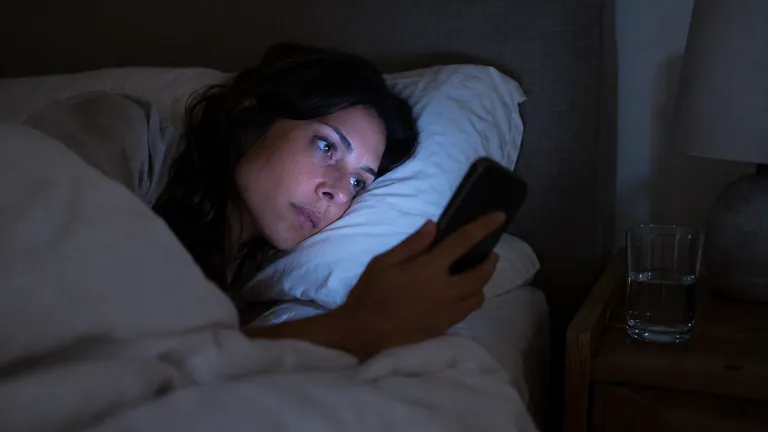
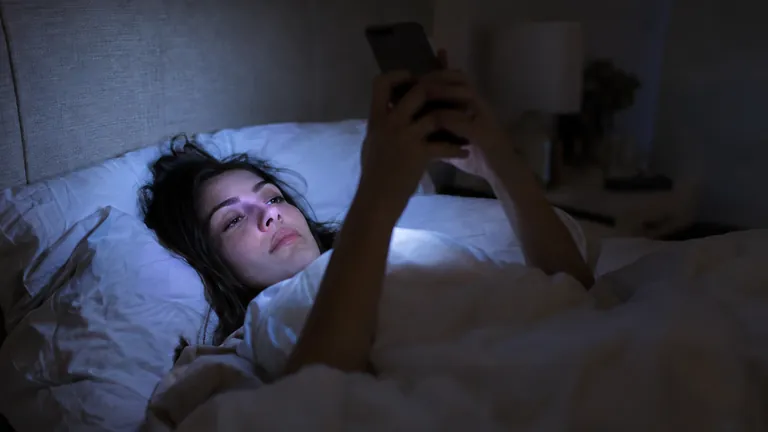
The practical takeaway isn't that your phone is this study's culprit (it didn't measure phones at all). It's that leisure screens and sleep can reinforce each other over years, in adults, not just children. That cuts both ways: a bad stretch of sleep can nudge you toward more passive screen time, and a heavy screen habit can make good sleep harder to hold onto. The pattern that went with poor sleep was years spent at a medium or high level, and the adults who came back down to low looked no different from those who had stayed there. The study can't show that cutting back caused that, but it's a reason to treat evening screen time as worth tending before it settles at a high level.
A fixed wind-down away from screens is one of the more direct places to intervene; see our guide to blue light and sleep for what an evening screen may be doing to your body clock, and revenge bedtime procrastination for why that last hour of scrolling feels so hard to give up even when you're tired. Setting Calmer evenings in Unrotten protects a window before bed from the apps you choose, so the choice is made ahead of time, not at midnight with the phone already in your hand.
Written by
Maren AshbyCOO, Unrotten
Maren Ashby is the COO of Unrotten, the iPhone app that helps people take their attention back from the feed. She writes about the research on phones, sleep and focus, and about the small, practical changes that make a phone easier to put down.