Blog/Phones & sleep/Explainer
Blue Light and Sleep: Does Your Phone Really Keep You Awake?
What light at night does to melatonin and your body clock, why Night Shift alone doesn't fix it, and the evening changes that help you sleep.

In this article
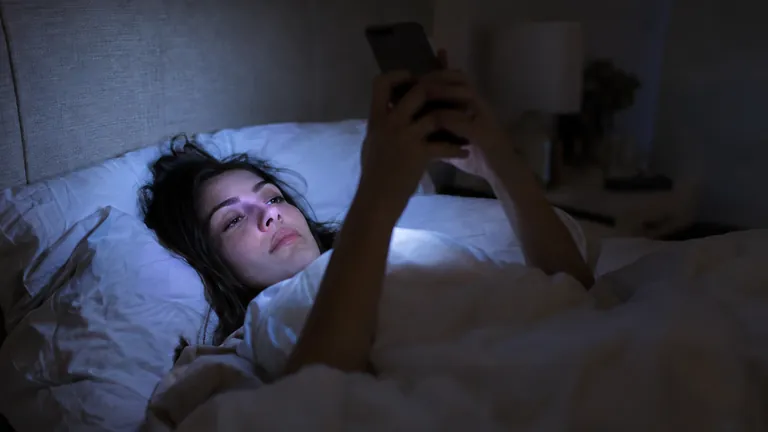
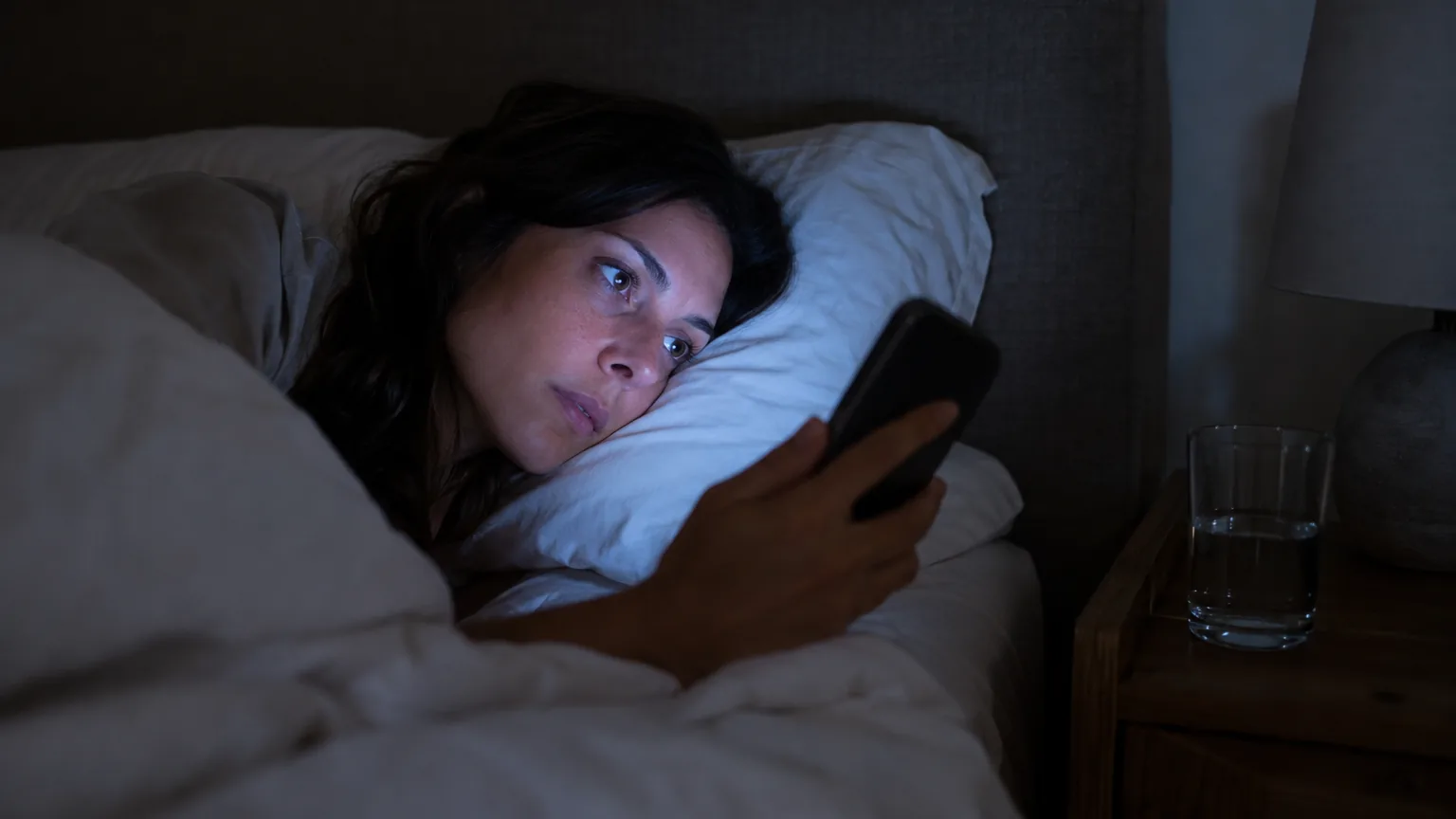
You've probably heard that the blue light from your phone wrecks your sleep, and that Night Shift fixes it. Both are only half true. Bright light in the evening does delay your body clock, but a phone screen is a small source, and in a trial, Night Shift made no difference to sleep. What usually keeps you up is what you're doing on the screen, and for how long.
How light sets your body clock
Your body keeps time with light. Special light-sensitive cells in your eyes report how bright it is to your brain's master clock, which uses that signal to decide when it's day and when it's night. In the evening, as light fades, your body releases melatonin, the hormone that tells it night has come. Light in the evening holds melatonin back and pushes the clock later.
Those cells are most sensitive to blue light. In a classic experiment, six and a half hours of blue light delayed the body clock twice as much as the same amount of green light, and held back melatonin twice as much [1].
But this isn't only about screens, or only about blue. When researchers compared days in ordinary room light, under 200 lux, with days in dim light during the eight hours before bed, room light made melatonin start later in 99% of people and cut the night's melatonin by about 90 minutes [2]. Ordinary lamps do it too. What matters is how bright the light is, how long it lasts, how close it is to bedtime and how much blue it carries.
Does the blue light from your phone affect sleep?
The tablet study everyone quotes
The best-known experiment kept 12 young adults in a sleep lab for two weeks. On five evenings they read for about four hours before bed on an iPad, and on five evenings they read a printed book, both in an otherwise very dim room [3]. After the tablet:
- they took nearly 10 minutes longer to fall asleep (about 26 minutes against 16);
- their evening melatonin was 55% lower, and it started more than an hour and a half later;
- they had less REM sleep;
- they felt less sleepy at bedtime and sleepier the next morning.
The authors noted that feeling more awake at bedtime could lead people to stay up later at home. It's a real effect, but a strong dose: four hours a night, at maximum brightness, in a dark room. A typical evening of scrolling is usually shorter and dimmer.
Dose matters
When researchers measured melatonin in 13 people looking at tablets set to full brightness, one hour made no significant difference, while two hours did [4]. In a double-blind trial, 22 adults spent two and a half hours playing games on a smartphone with its usual screen, and on another visit with the blue light suppressed. With the usual screen they felt less sleepy and made more errors on an attention test, but the difference in their melatonin was too small to be statistically significant [5].
The blue part of screen light does have an effect when it's turned up or down on purpose. In a Swiss lab study, 72 healthy men spent four hours before bed in front of screens at the brightness of a phone, a tablet or a computer, set either low or high in the light that most affects the body clock. With the lower setting, they fell asleep faster, kept more of their evening melatonin and felt less alert [6]. The researchers used special screens that could change that light without changing how bright the screen looked or its color.
Does Night Shift help?
Night Shift moves your iPhone's colors toward the warm end of the spectrum, showing more yellow and less blue. To set it, go to Settings, tap Display & Brightness, then Night Shift, and schedule it from sunset to sunrise or at the times you choose.
It's a nice idea, but one trial tested it in real life. Researchers randomly assigned 167 young adults to use their iPhones with Night Shift on, with it off, or not at all in the hour before bed for a week, and measured their sleep with wrist trackers. There was no significant difference between the three groups in how long people took to fall asleep, how long they slept or how well [7]. In an exploratory look at people who usually slept nearly seven hours or more, no phone at all gave the best sleep; Night Shift didn't close that gap.
Experts looking at the whole field have landed in a similar place. In 2024, a 16-member panel convened by the National Sleep Foundation reviewed the research and agreed that screen use, and what's watched before bed, harms sleep in children and teenagers, and that changing evening habits may soften the effects. It didn't reach agreement that screens harm adults' sleep in general, or that the light from screens before bed is what does the harm, at any age [8].
The light from your phone matters less than the reason you're still holding it at midnight.
What actually keeps you up
If light is a small part of the story, the rest is what the phone is doing to your evening.
In a survey of 844 Flemish adults aged 18 to 94, six in ten took their phone to the bedroom. People who sent or received messages and calls after lights out had worse sleep quality, took longer to fall asleep and felt worse during the day. Using the phone at bedtime went with getting up later, more insomnia symptoms and more fatigue [9]. A survey can't prove the phone caused it, but it describes a familiar night: the message that needs an answer, the feed that has one more video, the "five minutes" that become fifty.
That's the pattern behind revenge bedtime procrastination: staying up late on your phone to get back time the day took from you. The screen's light makes you a little less sleepy; the content makes you want to stay awake.
How to use light, and your phone, to sleep better
- Dim the whole evening, not just the screen. An international expert panel recommends keeping light at eye level low from at least three hours before bedtime, and the bedroom as dark as possible during sleep [10]. In practice: lamps instead of ceiling lights, warm bulbs, and no bright overhead light while you get ready for bed.
- Get bright light during the day. The same panel recommends bright light throughout the day, ideally daylight [10]. A morning walk or breakfast by a window helps set the clock your dim evenings then protect.
- Turn the phone down, not only warm. Brightness and time matter, not just color [4]. Lower the brightness in Control Center, schedule Night Shift, and for the last hour of the evening try Reduce White Point, in Settings under Accessibility, then Display & Text Size, which tones down the brightest colors. If you also want to see less of the colors that pull you in, read our guide to grayscale on iPhone.
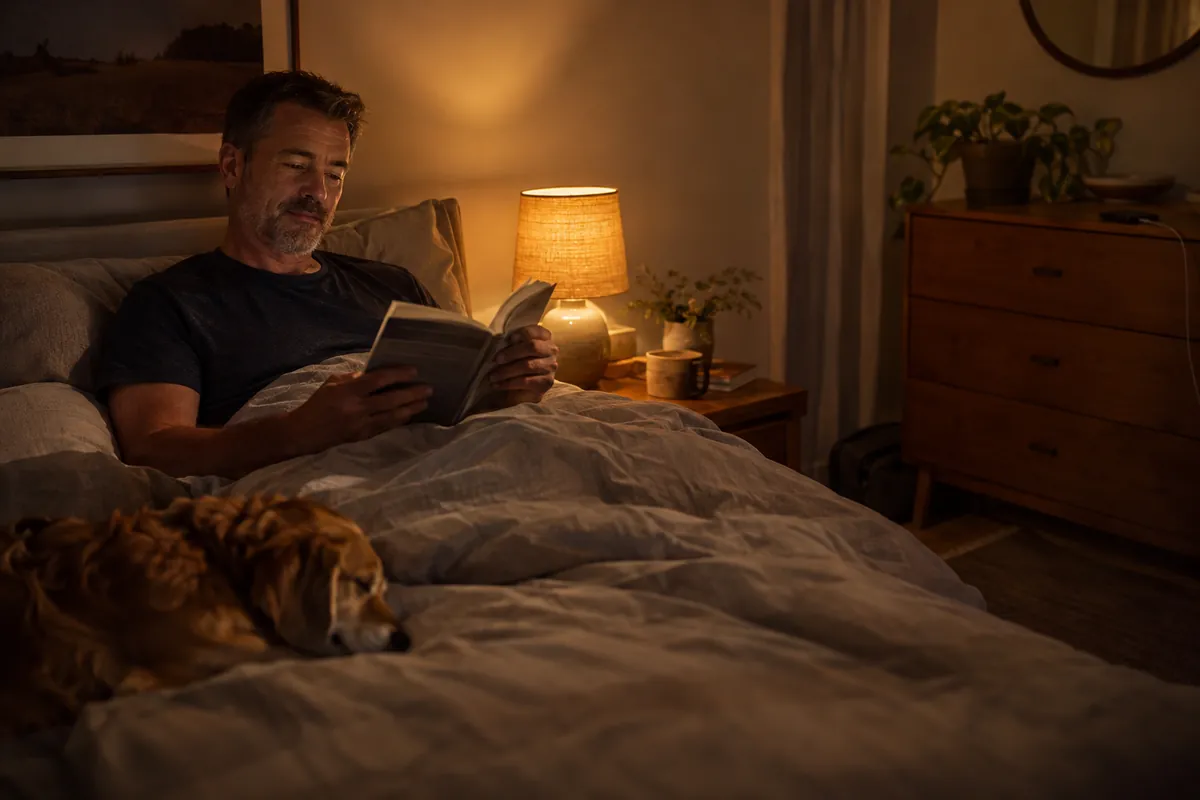
- Stop the feeds before bed. Choose something with an ending for your last hour: a paper book, a podcast with the screen off, a conversation. If you want to read on the phone, a Reading session in Unrotten locks your rot apps until it ends, so a chapter can't turn into a scroll.
- Put the evening on a schedule. Unrotten's Time away from apps goal blocks your rot apps during the hours you choose every day, so a quiet evening doesn't depend on a fresh decision each night. Apple's own Screen Time can schedule a pause too; our guide on how to lock apps on iPhone compares the options.
- Charge the phone outside the bedroom. It removes the light, the buzz and the temptation at once, and gives you a reason to buy a cheap alarm clock.
- Let the night count. Unrotten's MindBattery™ recharges with sleep from Apple Health, so a good night shows up in your score the next morning.

When it's more than your evenings
If you've had trouble falling or staying asleep for weeks, or you feel exhausted however long you spend in bed, talk to a doctor. Persistent insomnia and other sleep problems are common and often treatable, and they're not always about screens.
Dim the evening, not just the screen
Blue light is real biology, but it's a smaller lever than the warnings suggest. The bigger ones are simple: dim the whole house in the evening, get daylight in the morning, and stop scrolling early enough that your body notices night has come.
Questions people ask
Does blue light affect sleep?
It can. Blue light is the part of the spectrum that most strongly suppresses melatonin and shifts the body clock later. In a lab study, four hours of reading on a tablet before bed delayed melatonin by more than an hour and a half and made people take about 10 minutes longer to fall asleep. A typical evening on a phone is usually a smaller dose, so for most people the light matters less than what they do on the screen and how late they stay up doing it.
Does Night Shift help you sleep?
On its own, probably not much. In a one-week trial with 167 young adults, sleep was no different whether people used their iPhone with Night Shift, without it, or not at all in the hour before bed. Night Shift is fine to use, but dimming the screen and the room and stopping the scroll earlier matter more.
How long before bed should you stop using your phone?
There's no exact rule, but an hour is a sensible start. Experts recommend dim light for the last three hours before bed, and in studies, using the phone after lights out, for messages and calls for example, went with worse sleep.
Is it the light or the scrolling that keeps you up?
For most adults, probably the scrolling. Screen light can delay melatonin, especially when it's bright and lasts for hours, but a 2024 expert panel couldn't agree that light from screens before bed harms sleep. Messages, feeds and games keep your mind alert and can push your bedtime later.
References
- Lockley SW, Brainard GC, Czeisler CA. "High sensitivity of the human circadian melatonin rhythm to resetting by short wavelength light." The Journal of Clinical Endocrinology & Metabolism. 2003;88(9):4502-4505. doi:10.1210/jc.2003-030570 ↩
- Gooley JJ, Chamberlain K, Smith KA, Khalsa SBS, Rajaratnam SMW, Van Reen E, et al. "Exposure to room light before bedtime suppresses melatonin onset and shortens melatonin duration in humans." The Journal of Clinical Endocrinology & Metabolism. 2011;96(3):E463-E472. doi:10.1210/jc.2010-2098 ↩
- Chang AM, Aeschbach D, Duffy JF, Czeisler CA. "Evening use of light-emitting eReaders negatively affects sleep, circadian timing, and next-morning alertness." Proceedings of the National Academy of Sciences. 2015;112(4):1232-1237. doi:10.1073/pnas.1418490112 · Read our plain-English summary ↩
- Wood B, Rea MS, Plitnick B, Figueiro MG. "Light level and duration of exposure determine the impact of self-luminous tablets on melatonin suppression." Applied Ergonomics. 2013;44(2):237-240. doi:10.1016/j.apergo.2012.07.008 ↩
- Heo JY, Kim K, Fava M, Mischoulon D, Papakostas GI, Kim MJ, et al. "Effects of smartphone use with and without blue light at night in healthy adults: A randomized, double-blind, cross-over, placebo-controlled comparison." Journal of Psychiatric Research. 2017;87:61-70. doi:10.1016/j.jpsychires.2016.12.010 ↩
- Schöllhorn I, Stefani O, Lucas RJ, Spitschan M, Slawik HC, Cajochen C. "Melanopic irradiance defines the impact of evening display light on sleep latency, melatonin and alertness." Communications Biology. 2023;6(1):228. doi:10.1038/s42003-023-04598-4 ↩
- Duraccio KM, Zaugg KK, Blackburn RC, Jensen CD. "Does iPhone night shift mitigate negative effects of smartphone use on sleep outcomes in emerging adults?" Sleep Health. 2021;7(4):478-484. doi:10.1016/j.sleh.2021.03.005 ↩
- Hartstein LE, Mathew GM, Reichenberger DA, Rodriguez I, Allen N, Chang AM, et al. "The impact of screen use on sleep health across the lifespan: A National Sleep Foundation consensus statement." Sleep Health. 2024;10(4):373-384. doi:10.1016/j.sleh.2024.05.001 ↩
- Exelmans L, Van den Bulck J. "Bedtime mobile phone use and sleep in adults." Social Science & Medicine. 2016;148:93-101. doi:10.1016/j.socscimed.2015.11.037 ↩
- Brown TM, Brainard GC, Cajochen C, Czeisler CA, Hanifin JP, Lockley SW, et al. "Recommendations for daytime, evening, and nighttime indoor light exposure to best support physiology, sleep, and wakefulness in healthy adults." PLOS Biology. 2022;20(3):e3001571. doi:10.1371/journal.pbio.3001571 ↩
Written by
Maren AshbyCOO, Unrotten
Maren Ashby is the COO of Unrotten, the iPhone app that helps people take their attention back from the feed. She writes about the research on phones, sleep and focus, and about the small, practical changes that make a phone easier to put down.