
Blog/Guide
Revenge Bedtime Procrastination: Why You Scroll at Night
Why the last hour of the night feels like the only time that is yours, what it costs your sleep, and how to claim it back earlier.

In this article
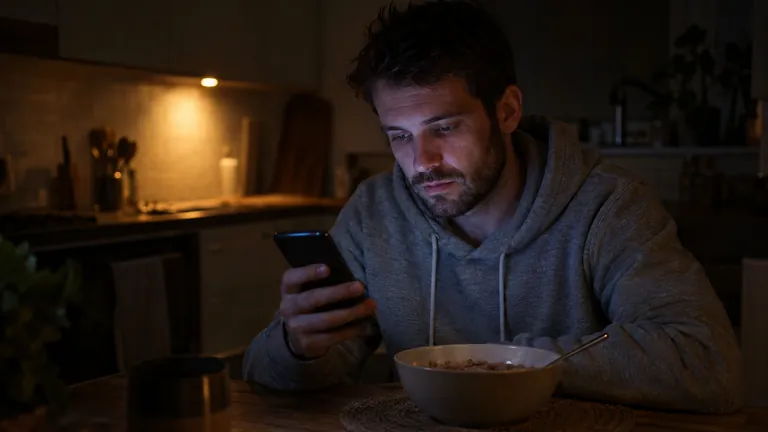
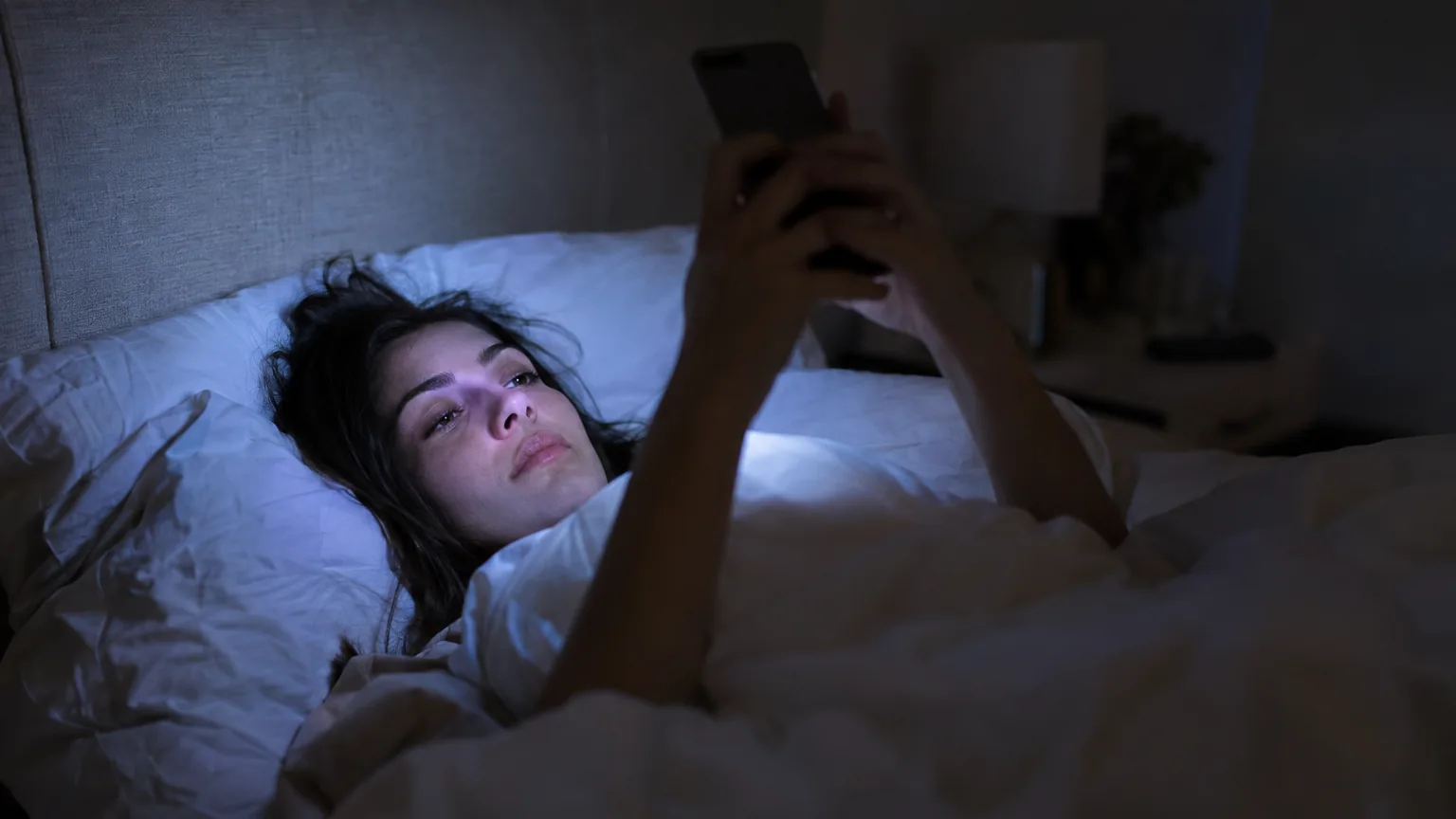
It's 12:40 a.m. You're exhausted, the alarm is set for 6:45, and you're still in bed with your phone, watching one more video, because this is the first hour all day that has felt like yours. That pattern has a name, revenge bedtime procrastination, and it isn't only about willpower: it has a lot to do with the day you had. Here's why it happens, what it costs, and what helps without asking for more discipline at midnight.
What revenge bedtime procrastination is
Revenge bedtime procrastination is staying up later than you meant to, when nothing is actually stopping you from going to bed, to win back time for yourself after a day that left you none. The "revenge" is aimed at the day: the job, the commute, the chores that took every waking hour. "Revenge sleep procrastination" and "revenge procrastination" usually mean the same thing.
The term translates the Chinese bàofùxìng áoyè, which could also be rendered as "retaliatory staying up late" [1]. It describes what many young Chinese workers do after long days, including those on the notorious "996" schedule (9 a.m. to 9 p.m., six days a week): give up sleep to get some leisure back. The earliest mention one BBC reporter could find was a November 2018 blog post by a worker in Guangdong, who wrote that during the workday he "belonged to someone else" [1]. In June 2020, the phrase spread rapidly on Twitter after a post by journalist Daphne K. Lee, who described people who "refuse to sleep early in order to regain some sense of freedom during late-night hours" [1].
Researchers had already named the behavior, minus the revenge. In 2014, psychologists at Utrecht University introduced "bedtime procrastination": going to bed later than you intended when no outside circumstances stop you [2]. In their survey of 177 adults, people who procrastinated more at bedtime scored lower on self-regulation and reported more insufficient sleep [2].
Why it happens
The day left no time that was yours
When Dutch researchers interviewed 17 people who often went to bed later than they meant to, three patterns emerged [3]. Some delayed on purpose because they felt they deserved some time for themselves: the revenge kind. Some lost track of time, absorbed in what they were doing. And some went to bed late so they would fall asleep more quickly, which, the researchers noted, may point to undiagnosed insomnia rather than procrastination [3]. It was a small interview study, but the three types are worth telling apart, because each needs a different fix.
Self-control runs low at the end of the day
Saying no all day seems to wear you down. In a study of 218 people, those who had tried to resist more temptations during the day were more likely to put off going to bed [4]. A 2022 review that pooled 43 studies found bedtime procrastination moderately linked to lower self-control and to being a night owl [5]. Most of that evidence is correlational and was rated low in quality, so cause and effect aren't settled. It does fit a familiar feeling.
The hour when you most need to stop is the hour you're least equipped to.
The phone is the easiest "me time" there is
After a long day, the phone asks nothing of you. It's already in your hand, it needs no plan, and its feeds never end, which is its own problem (we cover it in how to stop doomscrolling). The habit can also feed itself. In a study that followed 683 university students for six months, problematic phone use predicted more bedtime procrastination later, and bedtime procrastination predicted more problematic phone use [6].
What it costs
Sleep is where the bill arrives. Adults should sleep seven or more hours a night on a regular basis, according to a joint consensus statement from the American Academy of Sleep Medicine and the Sleep Research Society. Regularly getting less is associated with weight gain, diabetes, high blood pressure, heart disease, depression, impaired performance, more errors and a higher risk of accidents [7]. Bedtime procrastination tracks with less sleep: the 2022 review linked it to shorter sleep, poorer sleep quality and more daytime fatigue [5].
The screen can add to the bill. In a lab study, 12 young adults read for about four hours before bed on five evenings with a light-emitting e-reader and on five evenings with a printed book [8]. After the e-reader, they took about 10 minutes longer to fall asleep, made less of the sleep hormone melatonin, had body clocks shifted more than an hour and a half later, and were less alert the next morning. The authors noted that the screen also made people more alert at bedtime, which at home might push bedtime later still [8]. Four hours of screen reading in a dim room is a strong dose, so read it as a direction, not a measure of every glance.
The research on screen time before bed and after lights out is still messy. A study that followed 831 adolescents found that screen time after lights out, like screen time during the day, predicted worse sleep quality three months later, while poor sleep didn't predict more screen time. What people did on the screen also made a difference [9].
What helps
Take your "me time" earlier
If the late night is payback for a day with no room for you, don't try to skip the payback; collect it sooner.
Block 30 to 60 minutes after dinner that belong to you: a show, a hobby, a walk, a call. When your free time has already happened, bedtime is less likely to feel like the moment the day takes the last of it. And since a taxing day makes a bedtime harder to keep [4], make evening decisions early: set the bedtime alarm and move the charger in the afternoon, not at 11:45 p.m.

Set an alarm for bedtime, not just for waking up
For the "lost track of time" kind, an outside cue beats good intentions. Set an alarm 30 to 60 minutes before your target bedtime as the signal to start winding down. On an iPhone, the Sleep schedule in the Health app can add a Wind Down period before bed.
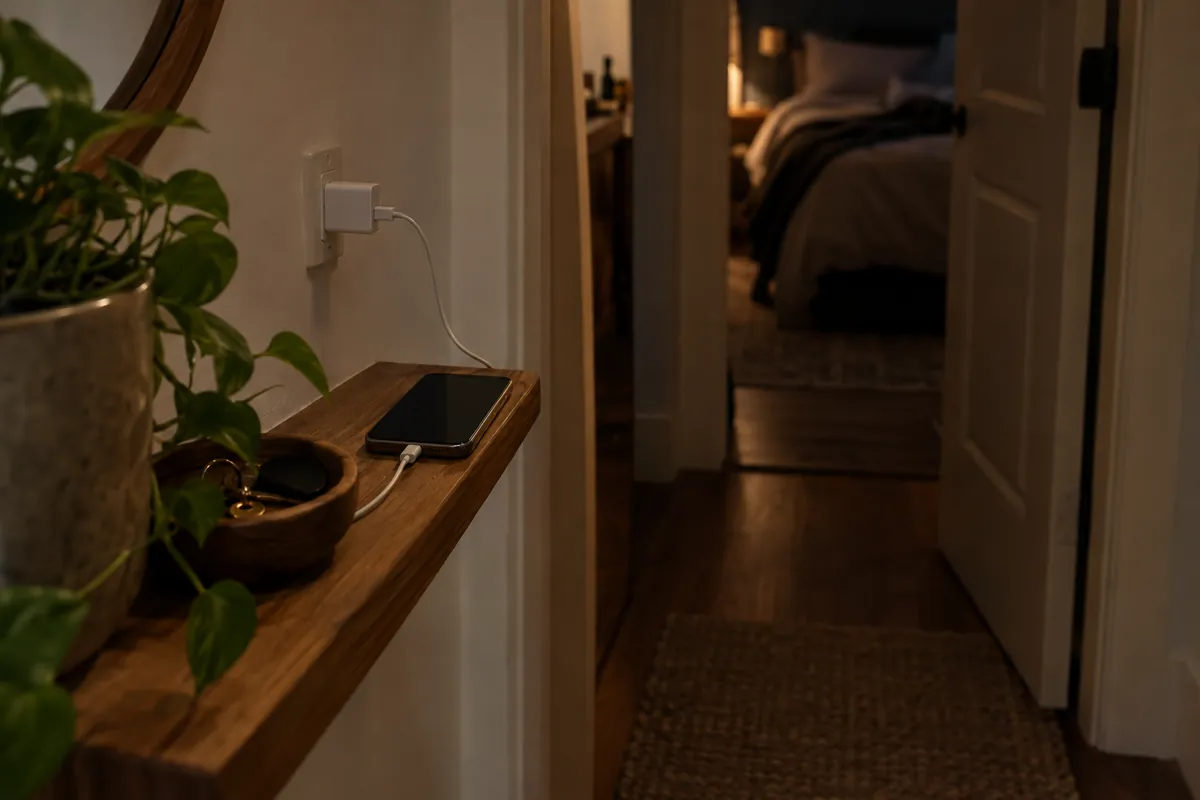
Charge your phone outside the bedroom
This one has a trial behind it. In a small randomized pilot, 38 college students who slept poorly and used their phones at bedtime were split into two groups [10]. One group stopped using the phone for the 30 minutes before bed, and for most of them the phone's own screen time settings locked it at that hour. After four weeks, they fell asleep faster (about 18 minutes, down from 31) and slept about 20 minutes longer, while the group that changed nothing saw little change [10]. A cheap alarm clock removes the last reason to keep the phone by the pillow, and a phone lock box helps if you know you'll go and get it. Or start a Reading session in Unrotten: it locks only the apps you chose, so your alarm still works.
Make the wind-down something you look forward to
Revenge procrastination is about pleasure and freedom, so a wind-down that feels like a chore will lose to the feed. Choose things you enjoy that have an ending: a chapter of a paper book (people fell asleep faster after the printed book than after the e-reader in that lab study [8]), a bath, a playlist, stretching, a podcast with a sleep timer.
Keep an evening window free of the apps
Pick a time, say 9:30 p.m., after which the feeds are off-limits, every night rather than only when you remember. Apple's Screen Time can schedule Downtime, but its limits come with an "Ignore Limit" option, which is a lot to resist at 11 p.m. In Unrotten, the Calmer evenings goal keeps that window shut, with no such option. There are also app blockers for iPhone that run on a schedule.
How Unrotten protects your evenings
Unrotten, the iPhone app we make, is built for this window. You choose the apps that eat your evenings (Unrotten never learns their names), and it holds the line for you:
- Calmer evenings sets a protected window each evening without those apps. Apple's Screen Time shield holds until the window ends, and it has no "Ignore Limit" button.
- Time away from apps blocks them on a daily schedule you set, or allows them only within one window.
- A Reading session, started from the + on Home, locks those apps until it ends, with a countdown on your Lock Screen and a soft alarm or gentle vibration when time is up.
- Improve my sleep tracks your nights, from Apple Health or logged by hand, and builds a streak on the days you meet it.
- The MindBattery, a score from 0 to 100, recharges with sleep and drains while you use those apps, so the trade between the feed and your sleep sits right on your Lock Screen.
You can still turn a goal off, so it's a commitment device, not a lock nobody can open. But at 11 p.m., a decision you made at noon is a good thing to lean on.
Take back the evening, one night at a time
Revenge bedtime procrastination makes sense: you're trying to get something back. The aim is to get it back without paying with tomorrow. Pick the fix that matches your kind of late night, the deliberate kind, the lost-track kind or the phone-in-bed kind, and give it two weeks.
If you stay up because you expect to lie awake anyway, or poor sleep lasts for weeks, talk to a doctor. That can be insomnia rather than procrastination, and a doctor can help.
Questions people ask
What is revenge bedtime procrastination?
It's staying up later than you meant to, with nothing stopping you from going to bed, to win back time for yourself after a day that left you none. The phrase translates a Chinese term and spread in English in 2020.
Is revenge sleep procrastination the same thing?
Yes. Revenge sleep procrastination and revenge procrastination usually mean the same habit. Researchers call the broader behavior bedtime procrastination, a term introduced in 2014.
Why do I stay up late on my phone when I'm tired?
Often because the evening is the only time that feels like yours, self-control runs low at the end of a long day, and the phone is the easiest reward within reach. Studies link bedtime procrastination to lower self-control, being a night owl and more taxing days.
Does using your phone before bed affect sleep?
It can. In a small trial, college students who stopped using their phones for the 30 minutes before bed fell asleep faster and slept about 20 minutes longer after four weeks than students who changed nothing.
How do I stop revenge bedtime procrastination?
Take your free time earlier in the evening, set an alarm for when to start winding down, charge your phone outside the bedroom, and keep a nightly window free of the apps that keep you up.
References
- Liang LH. "The psychology behind 'revenge bedtime procrastination'." BBC Worklife. 2020 Nov 26. bbc.com ↩
- Kroese FM, De Ridder DTD, Evers C, Adriaanse MA. "Bedtime procrastination: introducing a new area of procrastination." Frontiers in Psychology. 2014;5:611. doi:10.3389/fpsyg.2014.00611 ↩
- Nauts S, Kamphorst BA, Stut W, De Ridder DTD, Anderson JH. "The Explanations People Give for Going to Bed Late: A Qualitative Study of the Varieties of Bedtime Procrastination." Behavioral Sleep Medicine. 2019;17(6):753-762. doi:10.1080/15402002.2018.1491850 ↩
- Kamphorst BA, Nauts S, De Ridder DTD, Anderson JH. "Too Depleted to Turn In: The Relevance of End-of-the-Day Resource Depletion for Reducing Bedtime Procrastination." Frontiers in Psychology. 2018;9:252. doi:10.3389/fpsyg.2018.00252 ↩
- Hill VM, Rebar AL, Ferguson SA, Shriane AE, Vincent GE. "Go to bed! A systematic review and meta-analysis of bedtime procrastination correlates and sleep outcomes." Sleep Medicine Reviews. 2022;66:101697. doi:10.1016/j.smrv.2022.101697 ↩
- Cemei L, Sriram S, Holý O, Rehman S. "A Longitudinal Investigation on the Reciprocal Relationship of Problematic Smartphone Use with Bedtime Procrastination, Sleep Quality, and Mental Health Among University Students." Psychology Research and Behavior Management. 2024;17:3355-3367. doi:10.2147/PRBM.S472299 ↩
- Watson NF, Badr MS, Belenky G, Bliwise DL, Buxton OM, Buysse D, et al. "Recommended Amount of Sleep for a Healthy Adult: A Joint Consensus Statement of the American Academy of Sleep Medicine and Sleep Research Society." Sleep. 2015;38(6):843-844. doi:10.5665/sleep.4716 ↩
- Chang AM, Aeschbach D, Duffy JF, Czeisler CA. "Evening use of light-emitting eReaders negatively affects sleep, circadian timing, and next-morning alertness." Proceedings of the National Academy of Sciences. 2015;112(4):1232-1237. doi:10.1073/pnas.1418490112 ↩
- Chen Y, Li Y, Li S, He M, Chen Q, Ru T, et al. "When and what: A longitudinal study on the role of screen time and activities in adolescent sleep." Sleep Medicine. 2024;117:33-39. doi:10.1016/j.sleep.2024.03.008 ↩
- He JW, Tu ZH, Xiao L, Su T, Tang YX. "Effect of restricting bedtime mobile phone use on sleep, arousal, mood, and working memory: A randomized pilot trial." PLOS ONE. 2020;15(2):e0228756. doi:10.1371/journal.pone.0228756 ↩
Written by
Maren AshbyCOO, Unrotten
Maren Ashby is the COO of Unrotten, the iPhone app that helps people take their attention back from the feed. She writes about the research on phones, sleep and focus, and about the small, practical changes that make a phone easier to put down.