Blog/Social media & mental health/Explainer
Fear of Missing Out: Why Your Feed Makes FOMO Worse
What FOMO is, who feels it most, why a feed full of other people's best moments keeps it switched on, and the habits that quiet it.


In this article
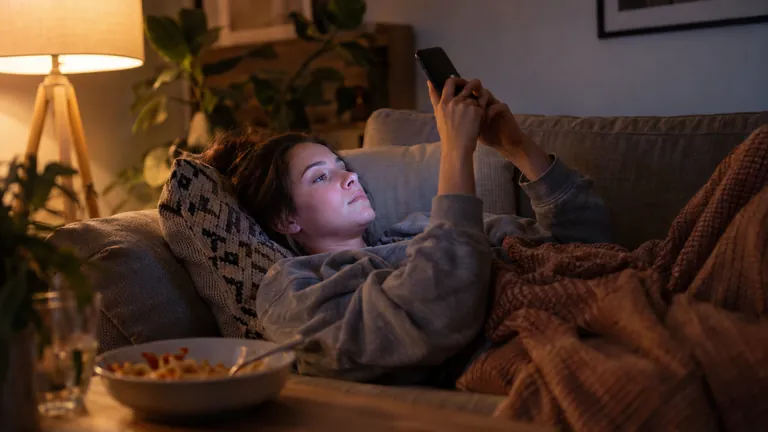
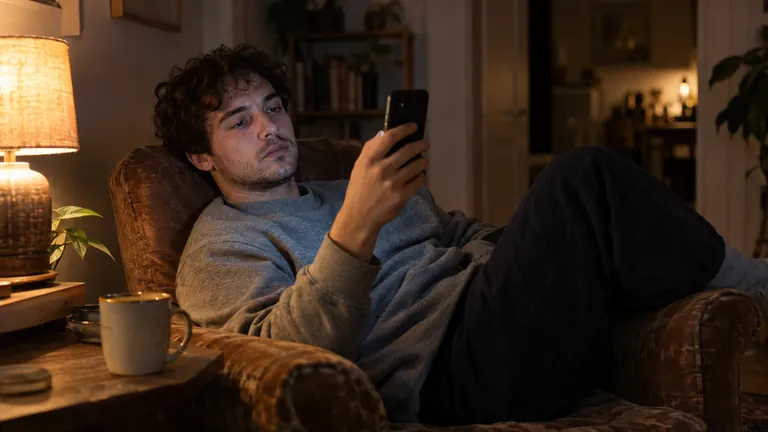
It's Saturday night and you're on the sofa in sweatpants, which was the plan until you opened Instagram. Now there's a rooftop, a birthday dinner and a beach weekend, all happening without you, and the evening that felt fine five minutes ago feels a little smaller. That sinking feeling has a name, fear of missing out, and your phone is very good at keeping it switched on. Here's what it is, why feeds make it worse, and what quiets it.
What fear of missing out is
The term was popular long before anyone measured it. In 2013, psychologists from the University of Essex, UCLA and the University of Rochester published the first studies of it and gave it a working definition: a pervasive apprehension that others might be having rewarding experiences from which you are absent, which comes with the desire to stay continually connected with what others are doing [1]. To measure it, they built a 10-item questionnaire, the Fear of Missing Out scale, tested on 1,013 people from around the world [1].
FOMO isn't a diagnosis. It's a common feeling with a recognizable pattern:
- seeing photos from a party you skipped and wondering whether you should have gone;
- checking the group chat in the middle of dinner in case the plans change;
- saying yes to everything, so nothing happens without you;
- keeping one eye on the feed during a movie, a lecture or a vacation;
- feeling uneasy when you haven't checked in a while.
That last one shades into nomophobia, the fear of being without your phone. The two overlap, but FOMO is about the people and the experiences on the other side of the screen, not the device itself.
Who feels it most
In the second of those 2013 studies, the researchers surveyed a nationally representative group of 2,079 working-age adults in Great Britain. Younger people reported the most fear of missing out, and younger men in particular. People with more FOMO also reported lower mood and lower satisfaction with life [1].
The most interesting finding was about needs. Psychologists describe three basic ones: feeling capable, feeling free to choose what you do, and feeling connected to other people. People whose needs were less met reported more FOMO, and FOMO in turn explained why they used social media more [1]. Put plainly, when life feels short on connection, the feed looks like the cure, and FOMO is the pull toward it.
In a third study, of 87 first-year university students, those higher in FOMO used Facebook more during lectures, felt more mixed emotions while using it, and more often glanced at their phones or texted while driving [1].
Why your feed makes FOMO worse
It shows you what you're not part of, live
Before smartphones, you heard about the party on Monday. Now you watch it happen. In a nationally representative survey of 1,787 Americans aged 19 to 32, the people who spent the most time on social media, two hours a day or more, had twice the odds of feeling more socially isolated as those who spent under half an hour. The most frequent visitors, 58 or more visits a week, had about three times the odds of those who visited fewer than nine times [2]. In the same survey, people who spent two hours or more a day had lower odds of feeling well supported emotionally [3].
Those surveys are snapshots, so they can't say which comes first: lonely people may simply scroll more. But the authors offer an explanation that anyone with FOMO will recognize: the feed is where you discover the pictures from events you weren't invited to, and it shows other people's lives highly curated, which can leave the impression that everyone else is happier and more connected than you [2].
Scrolling past other people's lives breeds envy
How you use the feed matters too. First in a lab experiment, then in everyday life with repeated short surveys, researchers from the University of Michigan and the University of Leuven found that passive Facebook use, scrolling through other people's posts without posting or messaging, led to drops in how good people felt over time. The path ran through envy, and it held even after accounting for active use and for time spent with people face to face [4].
The fear drives the checking
A 2021 meta-analysis pooled 86 results from studies of more than 55,000 people. Fear of missing out and internet use correlated at 0.41, a moderate link on a scale where 0 is none and 1 is a perfect match. The link was stronger for Instagram (0.49) than for Facebook (0.35) [5].
Whatever the studies eventually show about cause and effect, the experience is a loop.
Every check promises relief from missing out, and every check shows you something new to miss.
If the checking leaves you on edge rather than just restless, our guide to social media anxiety covers what else in the feed winds people up.
How to quiet FOMO
Ask what you actually want
People whose basic needs are less met tend to feel more FOMO [1], so when it hits, ask what's underneath. If it's company, text one person and make a plan, which a feed of other people's plans can't do for you. If it's rest, the night on the sofa was the right call: close the app and enjoy it.
Don't switch every notification off
Going cold turkey can backfire. In a two-week field experiment with 237 phone users, people who got no notifications at all reported more anxiety and more fear of missing out than people who got them as usual, while people whose notifications came in three batches a day felt less stressed and concentrated better [6]. On an iPhone, Scheduled Summary (Settings, then Notifications) does the batching for you: let messages from people through, and let everything else arrive two or three times a day.
Put a ceiling on the feeds
You may not need to quit. In a University of Pennsylvania trial with 143 students, those who kept Facebook, Instagram and Snapchat to 10 minutes each a day for three weeks became less lonely and less depressed than those who used them as usual. Fear of missing out and anxiety fell in both groups, which the authors put down to everyone tracking their own use [7]. A daily limit in Unrotten holds a ceiling like that for you: once the minutes you set are used up, Apple's Screen Time shield locks the apps you chose until the day resets.
Make checking a decision, not a reflex
Much of FOMO lives in the quick check: the phone out in the elevator, at a red light, between bites. Unrotten's Fewer app returns goal gives you a daily target for how many times you open the apps that pull you in, so each check counts against something you chose, and the days you meet it build a streak.
Be fully where you are
The cure for missing out is being somewhere completely. When you're out, put the phone face down or in a bag, and let the evening be the one you're actually having.

Try missing out on purpose
Some people call the opposite JOMO, the joy of missing out: choosing a quiet night and enjoying it because you chose it. Plan the nights in the way you plan the nights out, with a book, a film or a call, and they stop feeling like the consolation prize. If you want to go further, a social media detox of a week or two shows you how much of the urge was the habit.

When it's more than FOMO
Fear of missing out is common, and it usually eases when the feeds lose their grip. If the worry is constant, though, or it comes with anxiety, low mood or trouble sleeping that lasts for weeks, talk to a doctor or a therapist. They can help with what's driving it.
Choose what you miss
You will always be missing something: that was true before phones, and it's the price of being in one place at a time. The feed just makes sure you see it. Decide what deserves your evenings, put a ceiling on the rest, and let the photos wait until Monday.
Questions people ask
What does FOMO mean?
FOMO stands for fear of missing out. Psychologists define it as a pervasive worry that other people might be having rewarding experiences without you, which comes with the urge to stay continually connected to what they are doing. It is a common feeling, not a diagnosis.
Does social media cause FOMO?
Social media and FOMO are clearly linked. A meta-analysis of 86 results from more than 55,000 people found a moderate correlation between fear of missing out and internet use, stronger for Instagram than for Facebook. Most of that research measures both at the same moment, so it can't say which comes first.
Who gets FOMO the most?
In a nationally representative British survey of 2,079 working-age adults, younger people reported the most fear of missing out, and younger men in particular. People who felt less capable, less free to choose and less connected to others also reported more of it.
How do you stop FOMO?
Notice what you actually want when it hits, whether that's company, rest or a plan, and act on that instead of the feed. Batch your notifications rather than switching them all off, keep a daily ceiling on social media, and make a habit of being fully present for whatever you chose to do.
References
- Przybylski AK, Murayama K, DeHaan CR, Gladwell V. "Motivational, emotional, and behavioral correlates of fear of missing out." Computers in Human Behavior. 2013;29(4):1841-1848. doi:10.1016/j.chb.2013.02.014 ↩
- Primack BA, Shensa A, Sidani JE, Whaite EO, Lin LY, Rosen D, et al. "Social Media Use and Perceived Social Isolation Among Young Adults in the U.S." American Journal of Preventive Medicine. 2017;53(1):1-8. doi:10.1016/j.amepre.2017.01.010 · Read our plain-English summary ↩
- Shensa A, Sidani JE, Lin LY, Bowman ND, Primack BA. "Social Media Use and Perceived Emotional Support Among US Young Adults." Journal of Community Health. 2016;41(3):541-549. doi:10.1007/s10900-015-0128-8 · Read our plain-English summary ↩
- Verduyn P, Lee DS, Park J, Shablack H, Orvell A, Bayer J, et al. "Passive Facebook usage undermines affective well-being: Experimental and longitudinal evidence." Journal of Experimental Psychology: General. 2015;144(2):480-488. doi:10.1037/xge0000057 · Read our plain-English summary ↩
- Akbari M, Seydavi M, Palmieri S, Mansueto G, Caselli G, Spada MM. "Fear of missing out (FoMO) and internet use: A comprehensive systematic review and meta-analysis." Journal of Behavioral Addictions. 2021;10(4):879-900. doi:10.1556/2006.2021.00083 ↩
- Fitz N, Kushlev K, Jagannathan R, Lewis T, Paliwal D, Ariely D. "Batching smartphone notifications can improve well-being." Computers in Human Behavior. 2019;101:84-94. doi:10.1016/j.chb.2019.07.016 · Read our plain-English summary ↩
- Hunt MG, Marx R, Lipson C, Young J. "No More FOMO: Limiting Social Media Decreases Loneliness and Depression." Journal of Social and Clinical Psychology. 2018;37(10):751-768. doi:10.1521/jscp.2018.37.10.751 · Read our plain-English summary ↩
Written by
Maren AshbyCOO, Unrotten
Maren Ashby is the COO of Unrotten, the iPhone app that helps people take their attention back from the feed. She writes about the research on phones, sleep and focus, and about the small, practical changes that make a phone easier to put down.