Blog/Social media & mental health/Explainer
YouTube Addiction: Why One Video Turns Into Three Hours
Why autoplay, recommendations and favorite creators keep you watching long after you meant to stop, and the settings and habits that hand control back.

In this article
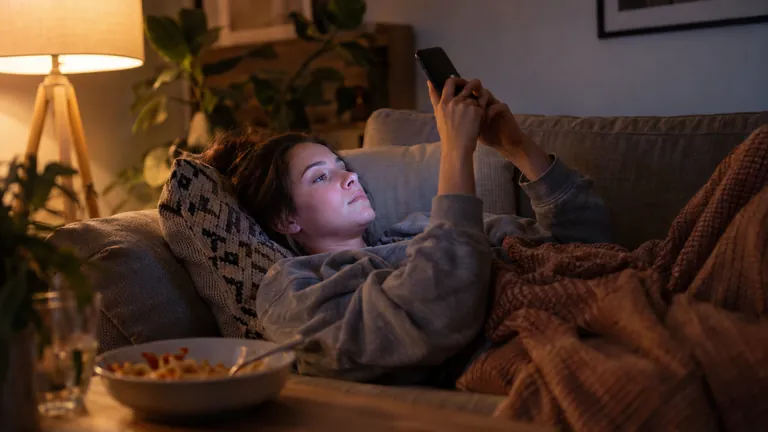
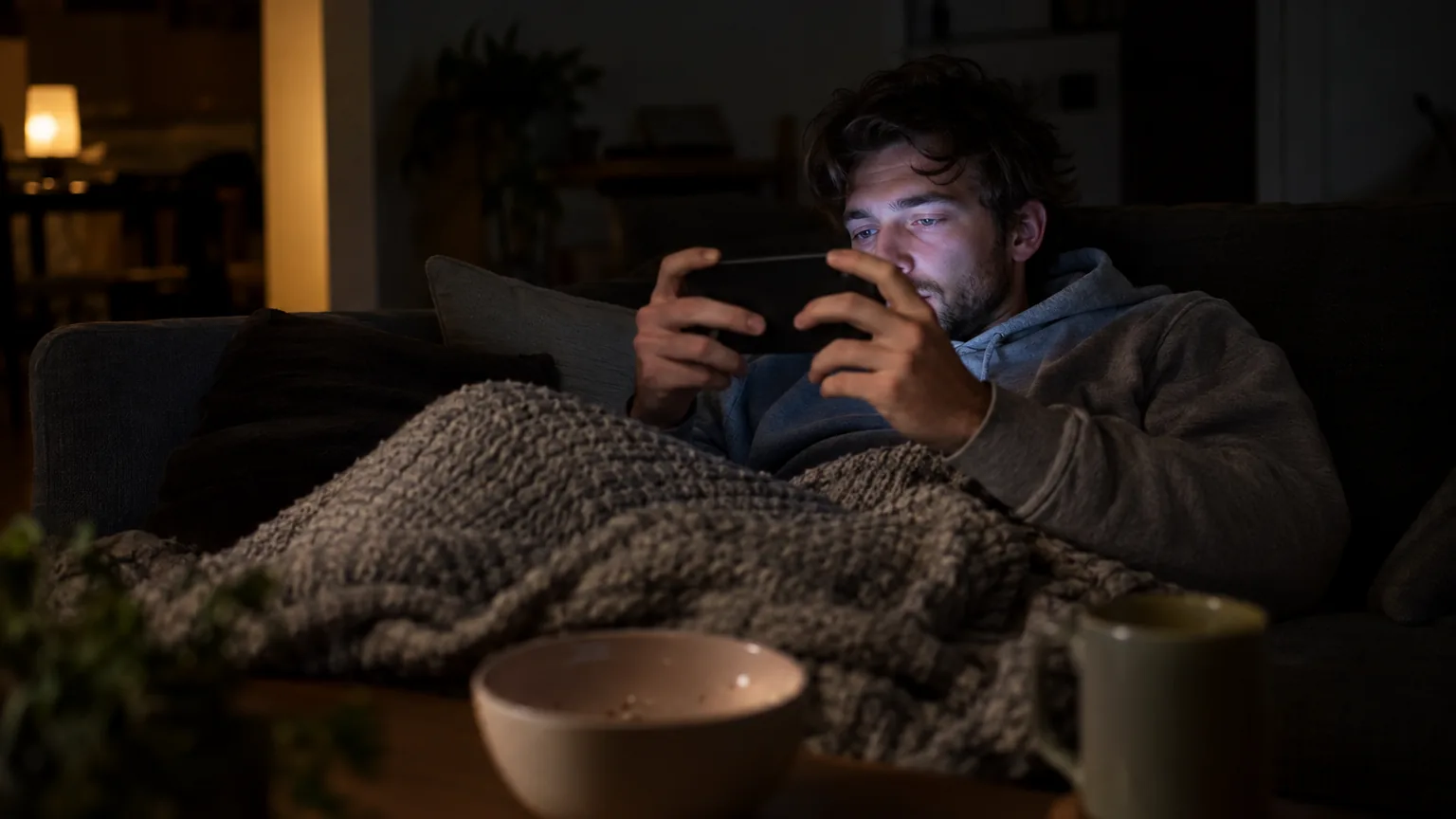
You open YouTube to check one thing: a recipe, a trailer, how to fix the hinge on a cabinet door. Three hours later you're watching a stranger restore a rusted pocketknife, and you can't remember choosing it. If that happens most nights, you're in a big crowd: 84% of US adults use YouTube, and 48% use it every day [1].
YouTube addiction isn't an official diagnosis, but researchers can measure a pattern that looks like one. Here's why YouTube is so hard to leave, who it pulls hardest, and the settings and habits that hand control back without deleting the app.
Is YouTube addiction real?
Not as a diagnosis. Like social media addiction, it isn't in the DSM-5 or the ICD-11. What researchers do is adapt established addiction questionnaires to YouTube and see how many people show the pattern: losing track of time, failing to cut back, using it to escape, feeling restless without it.
In one study, 932 young adults, most of them students in France and other Western countries, took a standard internet addiction test with "YouTube" in place of "the internet." About 18% scored in the mild range, and 1% in the moderate range or above [2]. Most viewers were in neither group. But a meaningful minority had a habit that had started to run them.
Why YouTube is so hard to stop
The next video is chosen for you
In 2018, YouTube's chief product officer, Neal Mohan, said that more than 70% of the time people spend watching YouTube comes from its AI-driven recommendations [3]. The home page, the column of suggestions and the end of every video are built to answer one question for you: what next?
People notice. In a survey of 120 American adults who watch YouTube on their phones, recommendations, ads and autoplay were the features they most often said made them feel less in control of their time. Playlists, subscriptions and search mostly made them feel more in control [4]. The researchers saw a pattern: features that wait for your choice, like pressing play or subscribing, felt like control, and features that act without being asked felt like losing it [4].
Autoplay removes the stopping point
A video that ends is a natural moment to decide. Autoplay replaces that moment with a countdown, so continuing takes nothing and stopping takes an action. In the same survey, 87% of the comments about autoplay described feeling less in control [4].
Shorts are a feed of their own
YouTube Shorts is a vertical feed of short videos you swipe through, each one picked for you. A 2025 meta-analysis of 71 studies and 98,299 people linked heavier short video use with poorer attention and self-control, and with more stress and anxiety [5]. The links were moderate at most, and the studies can't show which comes first. Our guide to TikTok addiction covers short video in depth.
Your favorite creators feel like friends
YouTube isn't only videos. It's people who talk to the camera as if they're talking to you, every week, for years. Researchers call that one-sided bond a parasocial relationship. In the study of 932 young adults, people who felt closer to their favorite YouTuber scored higher on YouTube addiction, and so did people with more social anxiety. About a quarter of social anxiety's link ran through that bond, and the bond counted for more the more socially anxious people were [2].
The company feels real. Whether it does what company does is another question. In a survey of 2,375 US adults aged 18 to 30, feeling emotionally supported by people in person went with lower odds of depression risk, while feeling supported through social media went with slightly higher odds [6]. It was one survey at one point in time, so it can't say which came first, but support through a screen didn't do what support in person did.
A creator can keep you company at midnight. They can't notice that you haven't slept.
What it costs you
Time is the obvious cost. Sleep is the quieter one. A review of 182 studies of children, teens and young adults found that plain time on social media had no significant link to sleep problems, while use that felt hard to control did, and was also more strongly linked to depression and anxiety [7]. The review couldn't separate YouTube from other platforms, but the lesson carries over: the trouble is less the hours you choose than the ones you can't stop.
The late-night video is often about something else: taking back time the day didn't give you. Our guide to revenge bedtime procrastination covers that pull and what helps. And if your watching comes with low mood, anxiety or sleep problems that don't lift, a doctor or therapist can help.
How to cut back on YouTube without deleting it
In design sessions, YouTube users wanted firm control when they opened the app for something specific, and were often happy to let it lead when they just wanted to unwind [4]. So the trick isn't to fight the app every minute. Decide which kind of visit this is before you open it, and set things up so the feed can't decide for you.
- Turn off autoplay. In the YouTube app, tap your profile picture, then Settings, then Autoplay, and switch it off. There's also a switch at the top of the video player [8]. Each video now ends with a decision instead of a countdown.
- Empty the home feed. Pause your watch history and clear what's there. YouTube says that when you have no significant recent watch history and have chosen not to get recommendations based on it, features like recommendations on the homepage are removed [9]. You arrive at a search bar instead of a feed.
- Go in through search, subscriptions and Watch Later. These are the features people said made them feel in control [4]. Save videos to Watch Later during the day, and watch from that list in the evening.
- Turn on YouTube's break reminder. Tap your profile picture, then Settings, then General, and switch on Remind me to take a break. It pauses the video until you dismiss it [10]. One tap dismisses it, so treat it as a nudge, not a lock.
- Keep YouTube out of bed. Watch in the living room, on the TV if you like, and charge your phone outside the bedroom. If you like something playing as you fall asleep, choose it before bed and let it end.
- Decide what YouTube is for. Write your rule down: tutorials, music and the channels you love, yes; the home feed after 10 p.m., no.

A limit that holds when you're tired
Apple's Screen Time can put a daily limit on YouTube, but its limits can be set aside once you reach them, and at midnight that tap is easy. Our guide to how to lock apps on iPhone walks through the built-in options and how to make them firmer.
Unrotten is built for the hours you don't choose. You pick the apps it watches, YouTube among them if that's where your nights go, and set your goals. Less scrolling gives those apps a daily limit: once it's used up, they lock until the day resets, with no "ignore limit" button. Shorter scroll sessions sets a session length, and past it the apps take a break before they open again, a stopping point autoplay never offers. Calmer evenings in Unrotten keeps a protected window each evening without those apps, so the hour before bed stays yours without a fresh decision every night.
A one-week YouTube reset
You don't need to quit to find out what YouTube is doing for you. Try one week:
- Day 1: turn off autoplay, pause and clear your watch history, and switch on the break reminder.
- Day 2: start a Watch Later list of five videos you actually want to see, and add to it during the day instead of watching on the spot.
- Days 3 to 6: in the evening, watch only from that list or your subscriptions, never in bed, and stop when the list runs out.
- Day 7: open Screen Time, compare your week with the one before, and notice what you missed and what you didn't.
Then decide what earns its way back: the creators you looked forward to, the videos you went looking for. The feed can wait.
Watch on purpose
YouTube can teach you to bake bread, fix a bike or play a song, and none of that is the problem. The goal isn't zero YouTube. It's YouTube you choose: the recipe, the lecture, the band's new video, and then the app closes because you closed it, not because it's 2 a.m. and the battery died first.
Questions people ask
Is YouTube addiction real?
It isn't an official diagnosis, but researchers can measure a pattern that looks like one. In a study of 932 young adults who took an internet addiction test adapted for YouTube, about 18% scored in the mild range and 1% in the moderate range or above.
Why is YouTube so addictive?
Most of what people watch is chosen for them: YouTube said in 2018 that more than 70% of watch time comes from its recommendations. Autoplay removes the natural stopping point at the end of each video, Shorts serve an endless feed, and favorite creators can feel like friends, a pull that was stronger in people with more social anxiety.
How do I stop watching YouTube at night?
Turn off autoplay, empty your home feed by pausing and clearing your watch history, watch in the living room instead of in bed, and charge your phone outside the bedroom. A daily limit or an evening window that locks the app helps on the nights when you're too tired to decide.
Can you turn off YouTube recommendations?
Mostly, on the home page. YouTube says that if you have no significant recent watch history and have chosen not to get recommendations based on it, features like recommendations on the homepage are removed. You can also turn off autoplay so the next video doesn't start on its own.
Should I delete YouTube or cut back?
Most people don't need to delete it: YouTube is useful for learning, music and fixing things. The goal is to watch on purpose. In design research, YouTube users wanted control when they came for something specific, so set the app up so that searches, subscriptions and saved videos come first and the feed comes last.
References
- Pew Research Center. "Americans' Social Media Use 2025." Pew Research Center. November 20, 2025. pewresearch.org ↩
- de Bérail P, Guillon M, Bungener C. "The relations between YouTube addiction, social anxiety and parasocial relationships with YouTubers: A moderated-mediation model based on a cognitive-behavioral framework." Computers in Human Behavior. 2019;99:190-204. doi:10.1016/j.chb.2019.05.007 ↩
- Solsman JE. "YouTube's AI is the puppet master over most of what you watch." CNET. January 10, 2018. cnet.com ↩
- Lukoff K, Lyngs U, Zade H, Liao JV, Choi J, Fan K, et al. "How the Design of YouTube Influences User Sense of Agency." Proceedings of the 2021 CHI Conference on Human Factors in Computing Systems. 2021:1-17. doi:10.1145/3411764.3445467 ↩
- Nguyen L, Walters J, Paul S, Monreal Ijurco S, Rainey GE, Parekh N, et al. "Feeds, feelings, and focus: A systematic review and meta-analysis examining the cognitive and mental health correlates of short-form video use." Psychological Bulletin. 2025;151(9):1125-1146. doi:10.1037/bul0000498 · Read our plain-English summary ↩
- Shensa A, Sidani JE, Escobar-Viera CG, Switzer GE, Primack BA, Choukas-Bradley S. "Emotional support from social media and face-to-face relationships: Associations with depression risk among young adults." Journal of Affective Disorders. 2020;260:38-44. doi:10.1016/j.jad.2019.08.092 · Read our plain-English summary ↩
- Ahmed O, Walsh EI, Dawel A, Alateeq K, Espinoza Oyarce DA, Cherbuin N. "Social media use, mental health and sleep: A systematic review with meta-analyses." Journal of Affective Disorders. 2024;367:701-712. doi:10.1016/j.jad.2024.08.193 · Read our plain-English summary ↩
- YouTube. "Autoplay videos." YouTube Help. Accessed November 10, 2026. support.google.com ↩
- YouTube. "View, delete, or turn on or off watch history." YouTube Help. Accessed November 10, 2026. support.google.com ↩
- YouTube. "Take a break reminder." YouTube Help. Accessed November 10, 2026. support.google.com ↩
Written by
Maren AshbyCOO, Unrotten
Maren Ashby is the COO of Unrotten, the iPhone app that helps people take their attention back from the feed. She writes about the research on phones, sleep and focus, and about the small, practical changes that make a phone easier to put down.