Research library/Meta-analysis
Phones at Bedtime and Sleep: A Meta-Analysis of 125,198 Kids

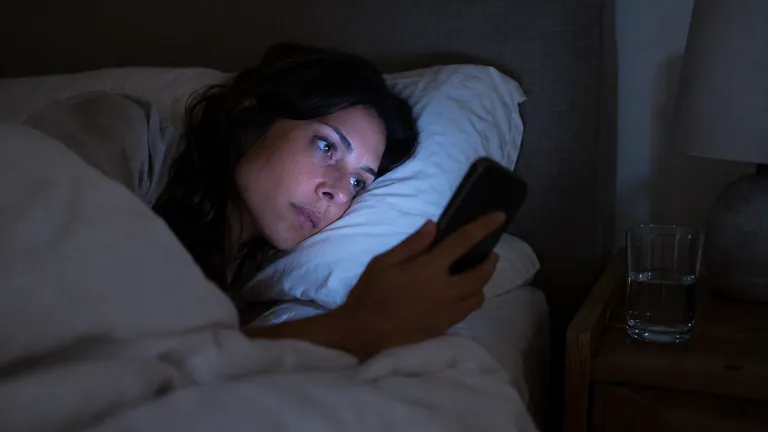
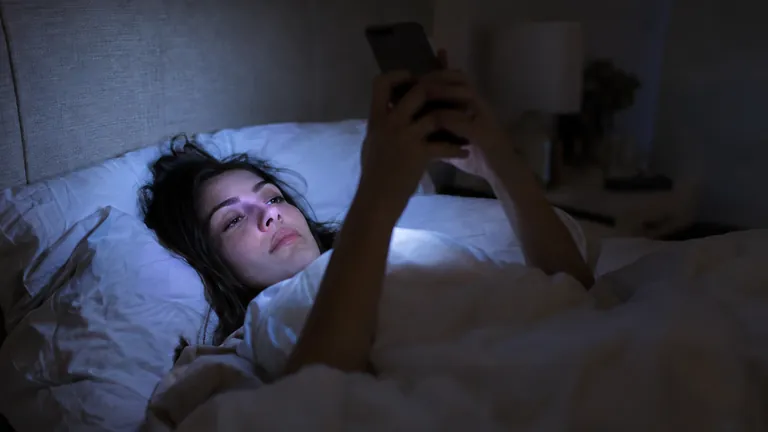
Children who used a phone or tablet near bedtime were about twice as likely to sleep too little, in a review that pooled the studies available in 2015, and merely having one in the bedroom also went with worse sleep. The authors call the association "strong and consistent." They also rate the overall evidence as low, because none of it comes from experiments.
What the researchers did
Ben Carter and colleagues, at Cardiff University and Stony Brook University, published the review in JAMA Pediatrics in 2016. They searched 12 databases for studies from January 2011 to June 2015, with no language limit. That window was chosen to reflect the interactive devices children use now, so older televisions and desktop computers were left out.
They looked at children and teenagers aged 6 to 19. The abstract counts 20 cross-sectional studies involving 125,198 children, 50.1% of them male; three were then excluded for poor methods or reporting, so 17 went into the analyses. Two reviewers extracted the data independently, following a protocol written in advance. Two exposures were compared with having no bedtime access (fewer than three nights a week counted as none): using a device around bedtime, and having one in the sleep environment.
Three outcomes were measured. Inadequate sleep meant under 10 hours a day for children and under 9 for adolescents. Poor sleep quality meant frequent trouble falling or staying asleep, or sleep that wasn't refreshing. The third was excessive daytime sleepiness. Results are odds ratios: a ratio of 2 means the odds were twice as high.
What they found
- Using a device near bedtime and too little sleep. Seven studies pooled to an odds ratio of 2.17 (95% CI 1.42 to 3.32). Leaving out one study of only 10 and 11 year olds, which explained much of the variation between studies, the ratio was 2.52 (1.79 to 3.55).
- Using a device near bedtime and poor sleep quality. Odds ratio 1.46 (1.14 to 1.88), about 46% higher.
- Using a device near bedtime and daytime sleepiness. Odds ratio 2.72 (1.32 to 5.61), from two studies.
- Just having a device in the sleep environment. Odds ratios were 1.79 (1.39 to 2.31) for too little sleep, 1.53 (1.11 to 2.10) for poor quality and 2.27 (1.54 to 3.35) for daytime sleepiness.
- Age and device type made no clear difference. The authors found no subgroup effects by study quality, children's age or whether the device was a phone or a tablet.
For too little sleep, two studies with data on each child, adjusted for age, gave odds ratios of 3.06 (2.01 to 4.70) for using a device and 1.88 (1.46 to 2.42) for having one nearby.
What the study can't tell you
The authors state it plainly: "the level of evidence for all findings is low." The studies were not randomized, which lowers the rating, and the large effects raised it again. Results varied a lot between studies, with a statistic for inconsistency (I²) as high as 90% for the main finding.
Sleep and device use were mostly self-reported, which brings measurement error. The authors also list the difficulty of establishing cause, isolating specific exposures and the fact that technology has outpaced research. Because all studies were cross-sectional, children who sleep badly for other reasons may simply reach for a screen more.
Everyone studied was a child or teenager, and the studies are from before mid-2015. The numbers may not describe an adult in 2026, though the questions they raise still apply.
What it means for your own screen habits
Two things stand out. Use near bedtime mattered, but so did simple access, which suggests the phone's presence is part of the pull. That fits what many adults notice: the phone on the nightstand gets picked up "just to check."
Start with distance. Charge it across the room, and give yourself a wind-down with no feeds in it. Our guide to blue light and sleep covers what the light itself does, and revenge bedtime procrastination explains why the late scroll feels deserved.
If you need help keeping the evening clear, Calmer evenings in Unrotten sets a protected window each day without the apps you choose, and a daily limit can lock them once your minutes are spent.
If poor sleep or daytime exhaustion lasts for weeks, a doctor can help.
Written by
Maren AshbyCOO, Unrotten
Maren Ashby is the COO of Unrotten, the iPhone app that helps people take their attention back from the feed. She writes about the research on phones, sleep and focus, and about the small, practical changes that make a phone easier to put down.