

Blog/Guide
Phone Addiction: The Signs, the Causes and How to Break It
Is it a real addiction? What researchers say, the signs to look for in your own habits, and the changes that loosen the phone's grip.

In this article
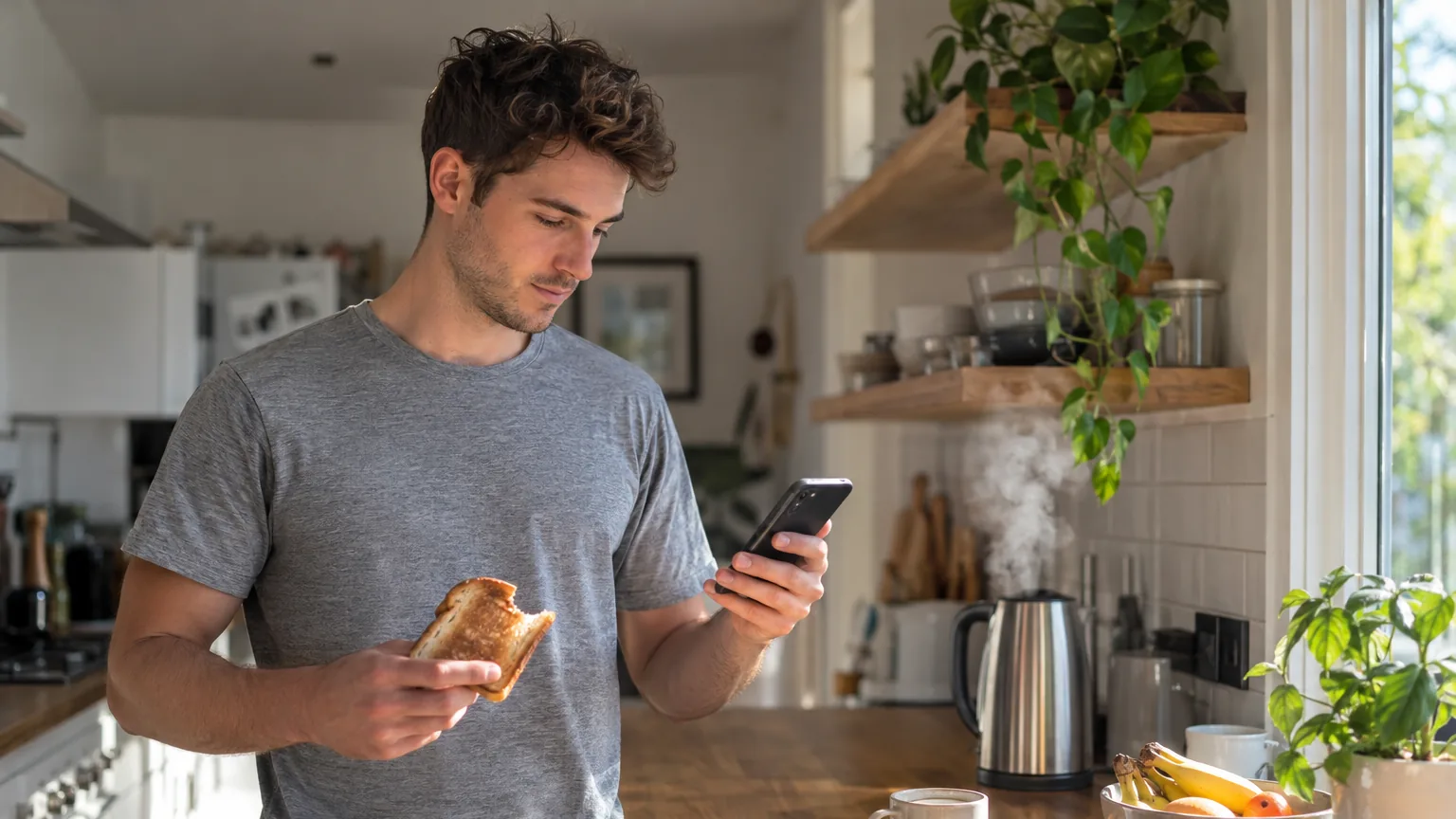
You open your phone to check the weather and look up twenty minutes later, weather unchecked. You reach for it in line at the store, in the elevator, in the ten seconds the microwave needs. If that sounds familiar, you've probably wondered whether you're addicted to your phone.
The short answer: phone addiction isn't an official diagnosis, and researchers still argue about the word. But the pattern behind it is real and common, and it gives way to changes you can make this week.
Is phone addiction real?
It depends on what you mean by addiction. When two psychologists reviewed the research in 2018, neither of the big diagnostic manuals, the DSM-5 and the then-draft ICD-11, mentioned smartphone addiction [1], and neither lists it as a diagnosis today. Their review found plenty of excessive use, poor control and real costs, but consequences milder than those of an addiction, and they suggested a plainer label: problematic smartphone use [1].
Many researchers now use that term. It's a useful one, because it keeps the focus on what the phone does to your days rather than on a label.
Something can be a real problem without being a disease.
How common is it? A 2022 meta-analysis pooled 504 studies covering more than 2.1 million people in 64 countries and put the share who score as addicted to their smartphone at about 27% [2]. Treat that number with care. The estimates swung with the region, the years studied and the questionnaire used, so it says more about how many people struggle than about how many have a disorder. The same analysis found digital addictions of every kind rising over the past two decades, and climbing faster during the COVID-19 pandemic [2].
Signs of phone addiction
The psychologist Mark Griffiths proposed that every addiction, with or without a substance, shares six components: salience, mood modification, tolerance, withdrawal, conflict and relapse [3]. Here's what they look like with a phone:
- It takes up your thoughts. You think about your phone, or what might be waiting on it, when you're not using it.
- You use it to change how you feel. You reach for it when you're bored, stressed, lonely or putting off something hard.
- You need more of it. The sessions get longer, or one app turns into five.
- You feel uneasy without it. A dead battery or a phone left at home makes you restless or irritable.
- It costs you something. Sleep, work, or attention to the people in the room.
- You cut back, then slide back. The app you deleted on Monday is back by Saturday.

None of these is a diagnosis, and having a few doesn't mean something is wrong with you. A simpler test works better: does your phone use cost you things you care about, and have your own attempts to cut back failed? If both answers are yes, the habit is worth changing, whatever you call it.
Why phones are so hard to put down
Boredom and fatigue pull the trigger
In one study, 83 PhD candidates rated how tired and bored they felt every hour at work while an app logged their phone use. The more fatigued or bored they were, the more likely they were to pick up the phone, which makes sense: it's the easiest break there is. The surprise came after. They reported feeling more tired and more bored after using it, not less [4].
The phone promises relief from the feeling that sent you to it, and often hands you more of it.
The rewards are built to be checked
Feeds, inboxes and notifications pay out unpredictably: most checks bring nothing new, and every so often one brings something good. That pattern is exactly what trains a checking habit, and it's why the urge can outlast the fun. Our guide to the dopamine detox explains the reward science behind it.
Mood and phone use feed each other
A 2017 review of 23 studies found that problematic smartphone use went with more severe depression, a consistent link of at least medium size, and with anxiety, consistent but small [5]. Those were correlations, so they can't say which came first. A study that followed 683 university students for six months suggests the answer is both: problem phone use predicted poorer sleep and more symptoms of depression, anxiety and stress six months later, and those symptoms in turn predicted more problem phone use [6].
What it costs
Most of the cost is quiet: hours, sleep and attention, taken a few minutes at a time.
Sleep. In that six-month study, problem phone use also predicted going to bed later than people meant to [6]. If your phone is the last thing you see at night, our guide to revenge bedtime procrastination covers why that hour feels so hard to give up.
Attention and well-being. In a randomized trial, people whose phones had all mobile internet blocked for two weeks, with calls and texts still working, improved in mental health, well-being and an objective test of sustained attention, and 91% improved on at least one of the three [7]. Part of the gain came from how they spent the time instead: more socializing in person, more exercise, more time in nature [7].
People. It rarely feels like much in the moment: a glance during dinner, half an ear during a story. Over a year, that's a lot of conversations you were only partly in.
How to break phone addiction
You don't need to throw your phone in a lake. The research points to a handful of changes that do more than willpower alone.
1. Start with your real numbers
Open Settings, then Screen Time, and look at a full week: your daily average, how often you pick the phone up, and the two or three apps that take the most. Write those numbers down. They're what you'll measure every change against.
2. Make the phone less tempting
In a randomized trial, people picked from ten simple changes, such as turning off non-essential notifications and switching the screen to grayscale, and kept them for two to six weeks. Compared with a group that only monitored its screen time, they reduced their problematic phone use and screen time and slept better, and their problem-use scores returned to normal levels for at least six weeks [8]. It was a small trial of 70 people, but every change in it is free.
On an iPhone, go to Settings, then Notifications, and turn off notifications for every app that doesn't bring you messages from people. For grayscale: Settings, Accessibility, Display & Text Size, Color Filters.
3. Cut back instead of quitting
In a German experiment with 619 smartphone users, a week with no smartphone and one hour less a day both reduced problematic use tendencies and eased depressive and anxiety symptoms. Most effects were stronger, and held up better over four months, in the group that simply cut back [9].
4. Trade screen time for movement
In a study of 503 adults, two weeks of using the phone an hour less a day, adding 30 minutes of physical activity a day, or both, all reduced symptoms of problem phone use, depression and anxiety. The groups that cut their phone time kept their gains longer than the group that only added exercise [10]. A walk is the easiest swap, and a dopamine menu gives you a list of others for the moments the urge hits.
5. Put some distance between you and the phone
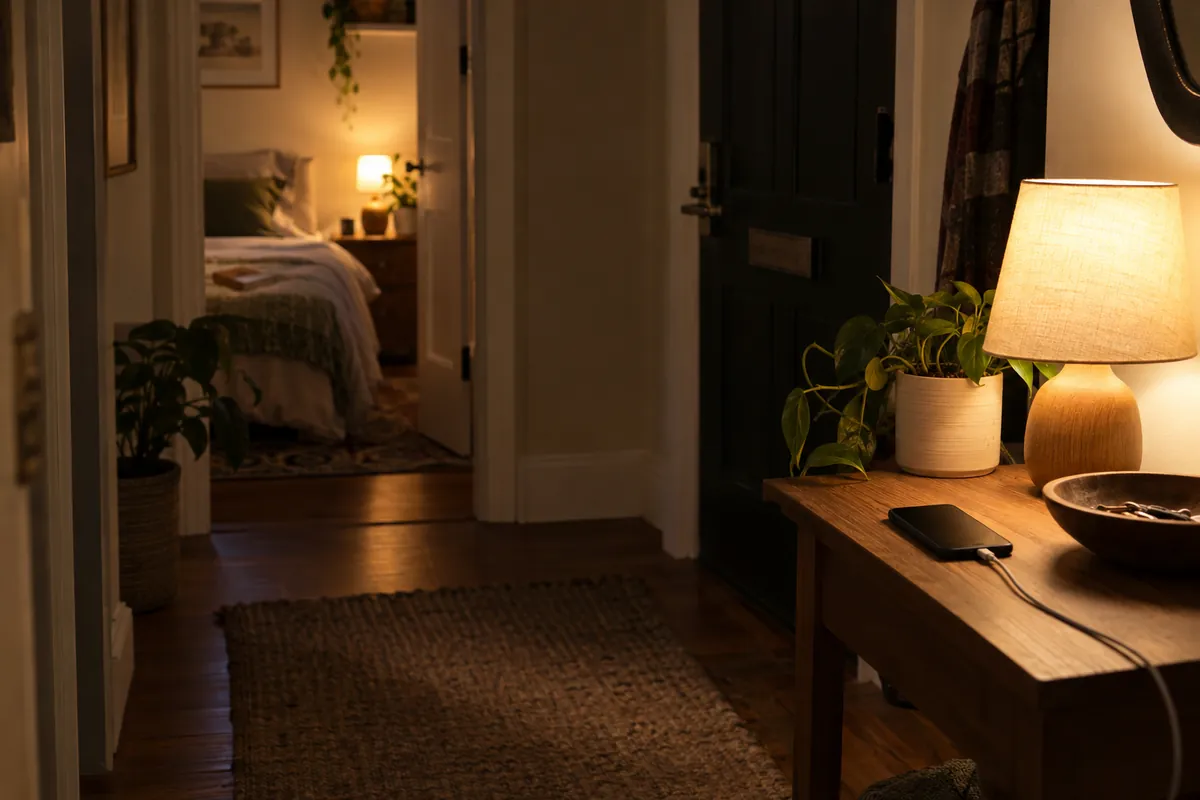
Charge it outside the bedroom, leave it in a bag at dinner, keep it in another room while you work. Distance turns an automatic reach into a decision you have to get up for.
6. Choose limits that hold when you're tired
The moments that send you to the phone are tired, bored ones [4], which is exactly when a limit you can dismiss with one tap is easiest to dismiss. Pick one that holds: a timed lock box for the evening, a blocker without an easy override, or a daily limit in Unrotten, which locks the apps you chose until the day resets.
How Unrotten loosens the grip
Unrotten is an iPhone app that turns these changes into goals that hold. You choose your rot apps, the ones that take your time (Apple's Screen Time hands them over as private tokens, so Unrotten never learns which apps they are), and pick the goals that match how the habit shows up for you:
- Checking all the time? Fewer app returns sets a daily target for how many times you open them.
- Hours slipping away? Less scrolling gives them a daily limit. When it's used up, Apple's Screen Time shield locks them until the day resets. The shield has no "ignore limit" button, and a limit you raise mid-day only counts from tomorrow.
- Can't stop once you start? Shorter scroll sessions sets a session length; past it, the apps take a break before they open again.
- Need an hour of real focus? Start a phone-free session (Work, Focus or Reading) from the + button on Home, and the apps stay locked until it ends.
- Want someone in your corner? The Coach, a chat that knows your goals and your day, checks in on plans you share and nudges you when your scrolling runs fast.
The MindBattery makes the cost visible: a score from 0 to 100 on your Lock Screen and in the Dynamic Island that drains while you use your rot apps and recharges with sleep, movement, mindful minutes and time away from them.
It's a commitment device rather than a cage, since turning a goal off lifts its shield, and it's a habit tool, not a treatment. To compare it with other tools, see the best app blockers for iPhone.
When to get help
If your phone use comes with low mood, anxiety or sleep problems that don't lift, or it's causing real harm at work or at home and you can't cut back on your own, a doctor or therapist can help. Asking for that help isn't a failure of willpower. It's the right tool for a bigger problem.
Start with the habit, not the label
Whether or not you call it an addiction, the way out looks the same: see your real numbers, make the phone a little less tempting, cut back rather than quit, and fill the time with something better. Pick one change tonight. Charging your phone outside the bedroom is a good first one.
Questions people ask
Is phone addiction a real diagnosis?
No. Neither the DSM-5 nor the ICD-11 lists smartphone addiction as a diagnosis, and many researchers prefer the term problematic smartphone use. The pattern is still real: heavy use that's hard to control, with real costs to sleep, work and relationships.
What are the signs of phone addiction?
Researchers borrow six components from the study of addiction: the phone takes up your thoughts, you use it to change how you feel, you need more of it, you feel uneasy without it, it costs you sleep, work or time with people, and you slide back after cutting down.
How common is phone addiction?
A 2022 meta-analysis of 504 studies in 64 countries estimated that about 27% of people score as addicted to their smartphone, with large differences depending on the region and the questionnaire used. Rates of digital addiction have risen over the past two decades.
How do you break a phone addiction?
Start with your Screen Time numbers, turn off non-essential notifications and try grayscale, cut back by an hour a day rather than quitting, swap some phone time for movement, charge the phone outside the bedroom, and use limits that can't be dismissed with a tap.
Is it better to quit your phone or cut back?
Cutting back looks better. In an experiment with 619 smartphone users, one hour less a day brought benefits that were mostly stronger, and more stable over four months, than a full week without the phone.
References
- Panova T, Carbonell X. "Is smartphone addiction really an addiction?" Journal of Behavioral Addictions. 2018;7(2):252-259. doi:10.1556/2006.7.2018.49 ↩
- Meng SQ, Cheng JL, Li YY, Yang XQ, Zheng JW, Chang XW, et al. "Global prevalence of digital addiction in general population: A systematic review and meta-analysis." Clinical Psychology Review. 2022;92:102128. doi:10.1016/j.cpr.2022.102128 ↩
- Griffiths M. "A 'components' model of addiction within a biopsychosocial framework." Journal of Substance Use. 2005;10(4):191-197. doi:10.1080/14659890500114359 ↩
- Dora J, van Hooff M, Geurts S, Kompier M, Bijleveld E. "Fatigue, boredom and objectively measured smartphone use at work." Royal Society Open Science. 2021;8(7):201915. doi:10.1098/rsos.201915 ↩
- Elhai JD, Dvorak RD, Levine JC, Hall BJ. "Problematic smartphone use: A conceptual overview and systematic review of relations with anxiety and depression psychopathology." Journal of Affective Disorders. 2017;207:251-259. doi:10.1016/j.jad.2016.08.030 ↩
- Cemei L, Sriram S, Holý O, Rehman S. "A Longitudinal Investigation on the Reciprocal Relationship of Problematic Smartphone Use with Bedtime Procrastination, Sleep Quality, and Mental Health Among University Students." Psychology Research and Behavior Management. 2024;17:3355-3367. doi:10.2147/PRBM.S472299 ↩
- Castelo N, Kushlev K, Ward AF, Esterman M, Reiner PB. "Blocking mobile internet on smartphones improves sustained attention, mental health, and subjective well-being." PNAS Nexus. 2025;4(2):pgaf017. doi:10.1093/pnasnexus/pgaf017 ↩
- Olson JA, Sandra DA, Chmoulevitch D, Raz A, Veissière SPL. "A Nudge-Based Intervention to Reduce Problematic Smartphone Use: Randomised Controlled Trial." International Journal of Mental Health and Addiction. 2023;21(6):3842-3864. doi:10.1007/s11469-022-00826-w ↩
- Brailovskaia J, Delveaux J, John J, Wicker V, Noveski A, Kim S, et al. "Finding the 'sweet spot' of smartphone use: Reduction or abstinence to increase well-being and healthy lifestyle?! An experimental intervention study." Journal of Experimental Psychology: Applied. 2023;29(1):149-161. doi:10.1037/xap0000430 ↩
- Precht LM, Mertens F, Brickau DS, Kramm RJ, Margraf J, Stirnberg J, Brailovskaia J. "Engaging in physical activity instead of (over)using the smartphone: An experimental investigation of lifestyle interventions to prevent problematic smartphone use and to promote mental health." Journal of Public Health. 2024;32(4):589-607. doi:10.1007/s10389-023-01832-5 ↩
Written by
Maren AshbyCOO, Unrotten
Maren Ashby is the COO of Unrotten, the iPhone app that helps people take their attention back from the feed. She writes about the research on phones, sleep and focus, and about the small, practical changes that make a phone easier to put down.