Research library/Experiment
Reading on a Tablet Before Bed: What a Sleep Lab Study Found

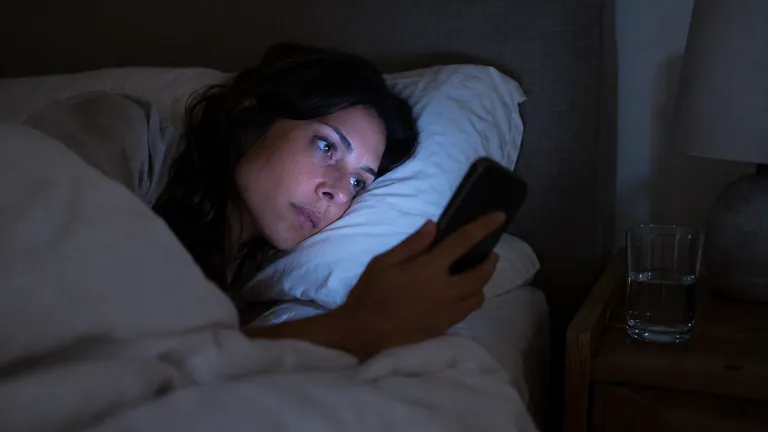
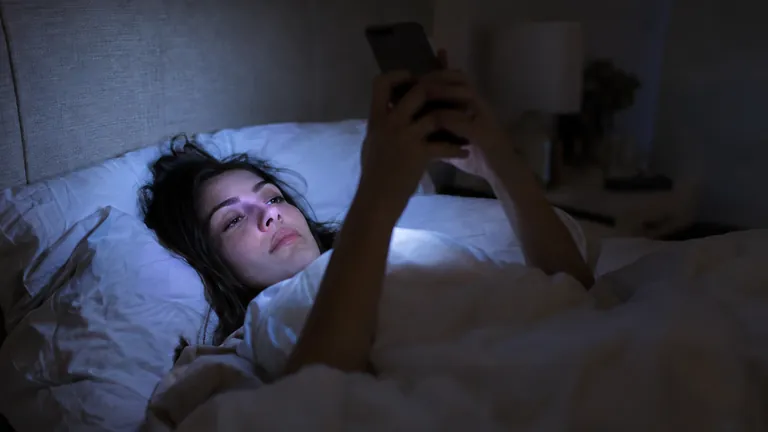
If you've ever been told that screens before bed keep you awake, this is probably the study behind it. Researchers at Brigham and Women's Hospital and Harvard Medical School had the same people read on a tablet and in a printed book before bed, with everything else held constant, and measured what happened to their hormones, their body clocks and their sleep.
What the researchers did
Anne-Marie Chang, Daniel Aeschbach, Jeanne Duffy and Charles Czeisler published the study in the Proceedings of the National Academy of Sciences in 2015. Twelve healthy young adults, six of them women, with an average age of about 25, lived in a hospital research unit for 14 days.
Each of them read for about four hours before bed, from 6 p.m. to just before a 10 p.m. bedtime, on two blocks of five evenings: one block on an iPad and one with printed books. The room was otherwise kept very dim, and the iPad was set to maximum brightness. At eye level, the tablet gave about 32 lux of light; the printed book, under 1 lux. The researchers measured melatonin, the hormone that rises in the evening and signals night to the body, recorded sleep in the lab, and asked participants how sleepy they felt.
What they found
- Falling asleep took longer. After reading on the tablet, participants took on average nearly 10 minutes longer to fall asleep: about 26 minutes against 16.
- Melatonin was suppressed and delayed. Evening melatonin was 55% lower after the tablet, and its rise came more than an hour and a half later, a sign that their body clocks had shifted later.
- REM sleep fell. They had less REM sleep after tablet evenings, about 109 minutes against 121.
- They felt more awake at night and worse in the morning. On tablet evenings they felt less sleepy before bed; the next morning they felt sleepier and took longer to wake up fully.
The authors pointed out that feeling more alert at bedtime could lead people at home to go to bed later, on top of the biological effects they measured.
What the study can't tell you
What happens with ordinary use. This was a heavy dose: four hours a night, five nights in a row, at full brightness in a dim room. Most evenings with a phone are shorter, and screens are often dimmer, so the effects of everyday use are likely smaller. Other studies have found that an hour on a bright tablet made no significant difference to melatonin, while two hours did.
Whether it applies to phones and everyone. It tested an iPad held at a fixed distance, not a phone, and twelve healthy young adults, not older adults or people with sleep problems. Twelve people is a small sample, although each person served as their own comparison.
Whether light is the whole story at home. In the lab, reading was the only thing people did. At home, a phone in the evening also brings messages, feeds and games, which can keep you up for reasons that have nothing to do with light.
What it means for your phone
The study shows that bright screens in the hours before bed can push your body clock later. The practical answer is less light for less time: dim the screen and the room in the evening, and swap long sessions in bed for something with an ending, such as a printed book.
If the phone in your hand is the hard part, a Reading session in Unrotten locks your rot apps until it ends, so reading doesn't slide into scrolling. Our guide to blue light and sleep covers what Night Shift does and doesn't do, and what experts recommend for evening light.
Written by
Maren AshbyCOO, Unrotten
Maren Ashby is the COO of Unrotten, the iPhone app that helps people take their attention back from the feed. She writes about the research on phones, sleep and focus, and about the small, practical changes that make a phone easier to put down.