Blog/Phones & sleep/Explainer
Bed Rotting: What It Is, and Why It Can Leave You More Tired
The trend of spending a whole day in bed: when it's real rest, why the phone turns it into a drain, and how to keep the recharge.

In this article
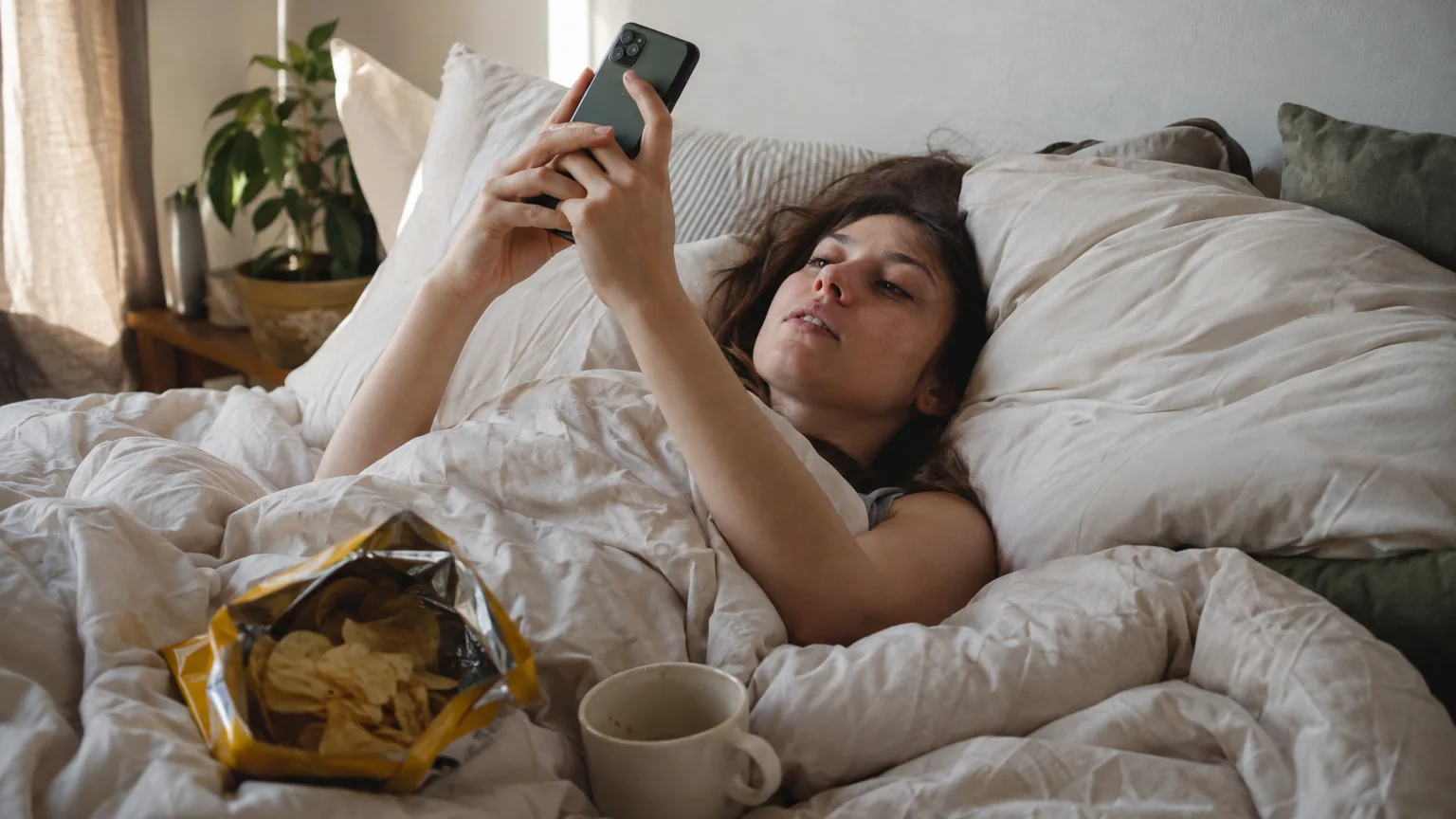
The blinds stay half shut, the snacks come into bed, and so does the phone. Hours later the light has moved across the room, and you feel oddly more tired than when you lay down. That's bed rotting, and whether it does you any good depends less on the bed than on what fills the hours you spend in it.
What is bed rotting?
Bed rotting means retreating to bed for hours, or a whole day, on purpose: snacks, shows, no responsibilities, and no plan to get up until you feel properly rested. By the summer of 2023 it was, in the words of a lecturer in 19th-century literature writing in The Conversation, the latest social media craze filed under wellness, with hundreds of TikToks of soft bedding and carefully cluttered duvets. She saw it as part of a wider pushback against hustle culture and productivity cults [1].
The name sounds grim on purpose. The idea behind it is gentle: you're allowed to stop.
It's also common. In a 2024 online survey of 2,006 US adults commissioned by the American Academy of Sleep Medicine (AASM), nearly a quarter of Gen Z adults (24%) said they practice bed rotting. The AASM describes it as staying in bed, sometimes for a day or more, to do things other than sleep in the hope of feeling more restored. The same survey found that 51% of people spend more than 30 minutes in bed before trying to sleep, and 27% stay in bed that long in the morning before getting up [2].
Is bed rotting bad for you?
Not necessarily. Rest is real, and plenty of people get too little of the kind that works. A meta-analysis of 54 samples and 26,592 people found that mentally switching off from work after hours, which researchers call psychological detachment, goes with less fatigue, and that feeling in control of your free time goes with more vigor [3]. A day that lets you switch off, on your own terms, is not a wasted day.
The AASM's spokesperson on the trend, the sleep physician Anne Marie Morse, put it plainly: these trends "may not be inherently harmful, but it's important to remember that the bed's primary purpose is for sleep" [2].
So the question isn't whether you're in bed. It's what you're doing there, and for a lot of people the honest answer is the phone.
Why bed rotting with your phone leaves you drained
A day in bed with a feed looks like rest from the outside. To your brain, it often isn't.
A phone break isn't much of a break. In an experiment with 414 participants, people solved anagrams, took a break and then solved more. Those who spent the break on a phone recharged less than those who took the same break on paper or a computer: they were slower in the second round and solved fewer. On speed, they did no better than people who took no break at all [4]. It was one lab study with students and a shopping task, not a feed, but the direction is hard to ignore.
A screen can blunt the rest you'd get anyway. In another experiment, 81 people did tiring mental tasks and then rested in a green setting or a barren one, with or without a laptop. Green surroundings helped attention recover, and using the laptop during the rest substantially counteracted that benefit [5]. The device was a laptop, not a phone, but the lesson carries: where your attention goes during a rest decides how much rest you get.
Autopilot scrolling goes with fatigue. In a 2025 survey of 745 social media users in Saudi Arabia, scrolling on autopilot, habitual and unintended rather than chosen, consistently predicted the attention problems, working memory slips and mental fatigue people reported [6]. It's one survey at one point in time, so it can't show which came first.
What you watch matters too. In a lab experiment and a field study, using Facebook passively rather than actively was followed by a drop in mood, largely through envy [7]. A later review of 40 survey studies found that the simple rule of passive bad, active good wasn't supported in most of them, and argued that what's in the feed and who's reading it have to be taken into account [8]. Either way, an afternoon of other people's highlights is a gamble with how you'll feel.
Rest gives back what the day took. A feed keeps taking, even when you're lying down.
The phone stays in bed with you. In a survey of 844 adults in Belgium, six in ten took their phone to the bedroom, and phone use at bedtime went with later rise times, more insomnia symptoms and more fatigue [9]. If you've ever traded sleep for one more video, that's revenge bedtime procrastination, the night shift of the same habit.
Bed rotting and sleep: why the bed is different
There's one more cost, and it matters most if you sleep badly. For adults with chronic insomnia, one of the approaches the AASM's clinical guideline suggests is called stimulus control. Its instructions are simple: go to bed only when sleepy, get out of bed when you can't sleep, keep the bed for sleep and sex (no reading or TV in bed), wake at the same time every morning and skip daytime naps. The aim is to break the link your brain has made between the bed and being awake [10].
A day of lying awake in bed, phone in hand, builds exactly that link. The AASM's spokesperson warned that for anyone already struggling with sleep, trends like bed rotting "may actually worsen the sleep problem" [2].
If you sleep well, an occasional slow morning under the covers probably won't hurt. If you sleep badly, take your lazy day to the sofa and save the bed for the night.
How to make a rest day actually restful
You don't need to give up the lazy day. You need to make sure it's rest.
- Call it on purpose. Decide in the morning that today is a rest day. Rest you chose feels different from a day that slipped away while you meant to get up.
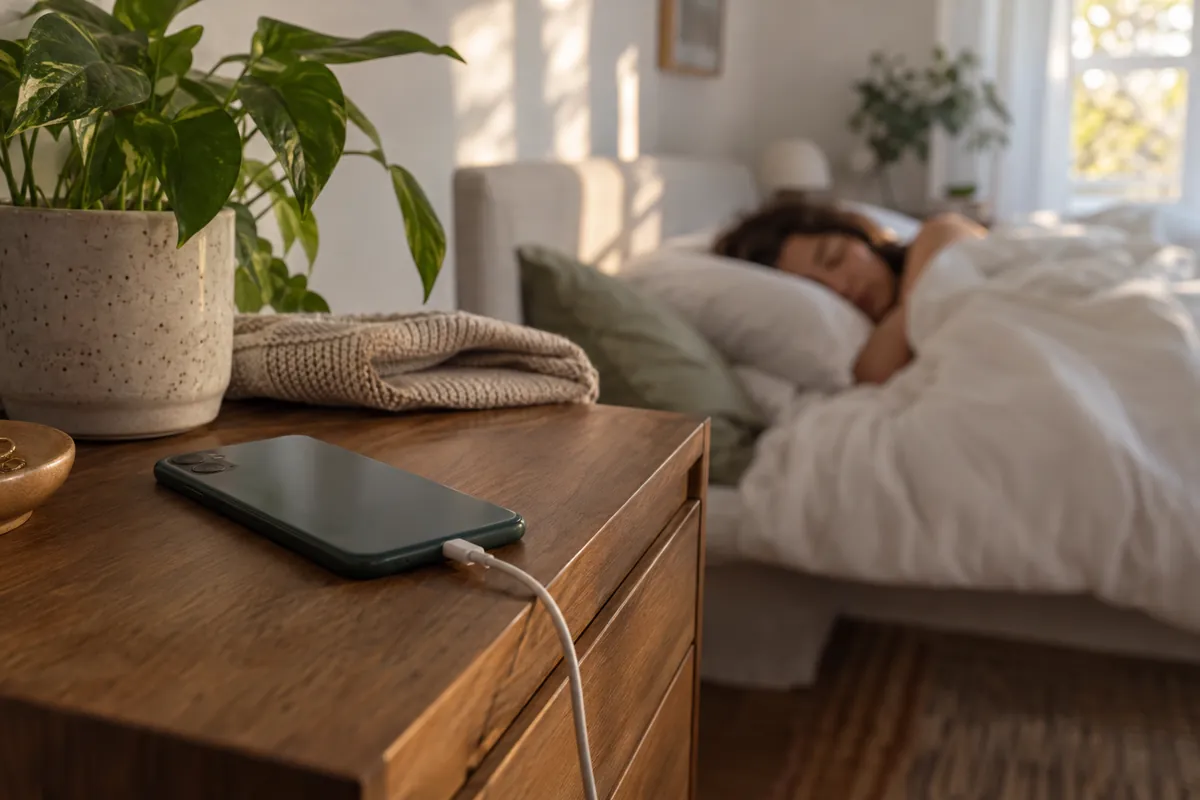
- Keep the phone out of the bed. Charge it across the room, or in another room. If the feeds pull you back anyway, lock them for the afternoon: a Reading session in Unrotten, started from the + on Home, locks the apps you chose until it ends, with a countdown on your Lock Screen, while calls and everything else keep working.
- Choose rest that gives something back. Sleep if you're tired, one episode you picked rather than whatever autoplays, a book, music, a bath, a long call with a friend. If you need ideas, a dopamine menu is a list of exactly these.
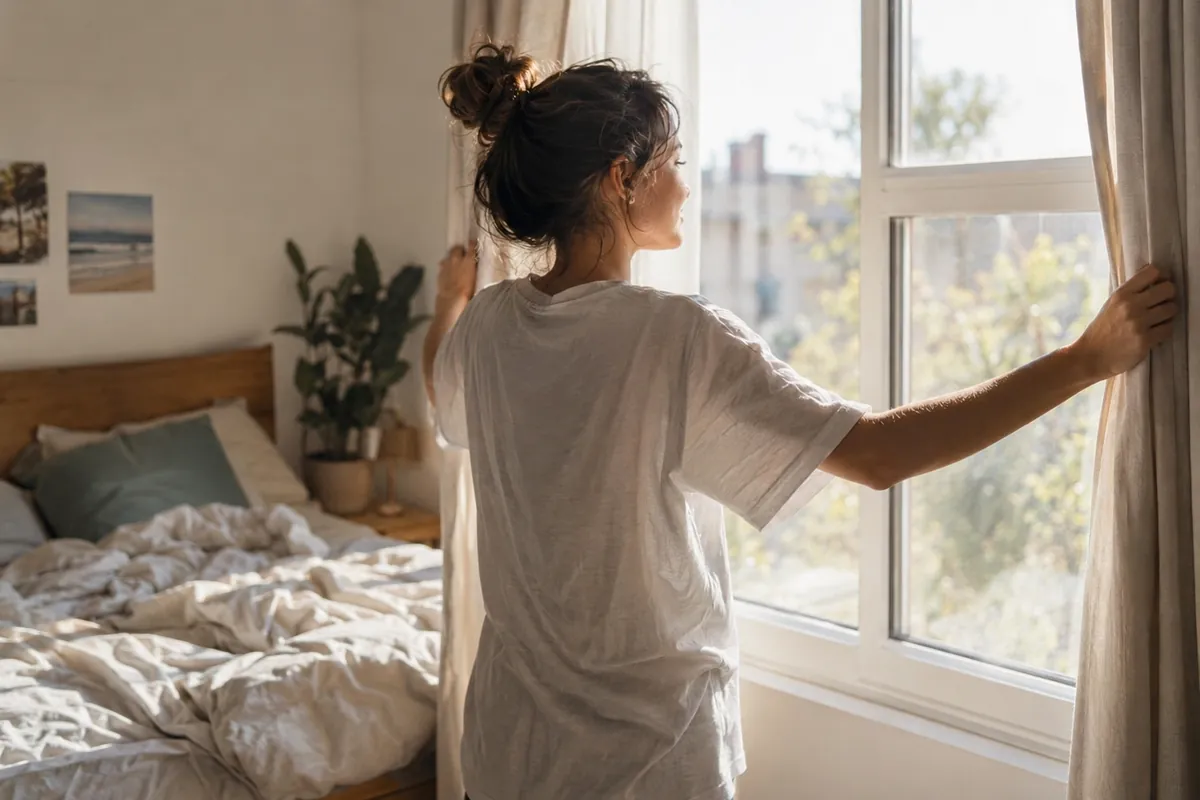
- Let the light in. Open the curtains, even if you go back to the sofa. Better still, go outside for a while: time outdoors has good evidence behind it for restoring attention.
- Judge the day by how you feel, not how long you rested. If you feel foggier than when you started, the day wasn't rest. Unrotten's MindBattery™ makes that visible: a score from 0 to 100 that drains while you're in your rot apps and recharges with sleep, movement, mindful minutes and time away from them.
When staying in bed is more than a lazy day
Choosing a day in bed is one thing. Not being able to get out of it is another. If you stay in bed because getting up feels impossible, if it happens most days, or if low mood, hopelessness or exhaustion lasts more than two weeks, talk to a doctor or a therapist: that's exactly what they're there for. If you're in the US and ever think about harming yourself, call or text 988.
Rest, without the rot
Bed rotting gets one thing right: you're allowed to stop. The catch is that the phone rarely stops with you. Keep the slow day, the snacks and the blanket, and send the feed to another room. That's the kind of rest you get up from feeling better.
Questions people ask
What does bed rotting mean?
Bed rotting means spending hours, or a whole day, in bed on purpose, usually with snacks and shows, as a way to rest. The name took off on TikTok, where it's framed as self-care and a break from hustle culture. In a 2024 US survey, nearly a quarter of Gen Z adults said they do it.
Is bed rotting bad for you?
Not necessarily. Rest is good for you, and an occasional slow day can help you recover. The trouble is what often fills the day: hours of scrolling don't recharge you the way real rest does, and if you already sleep badly, lying awake in bed for hours can make your sleep worse.
Is bed rotting a sign of depression?
Not on its own. Choosing a lazy day in bed is common. But if you stay in bed because getting up feels impossible, if it happens most days, or if low mood or exhaustion lasts more than two weeks, talk to a doctor or a therapist. In the US, you can call or text 988 at any time if you're in crisis.
How do I stop bed rotting?
You don't have to give up rest days, just make them restful. Charge your phone outside the bedroom or lock your most distracting apps for a few hours, pick rest you enjoy, like a nap, a book or one show you chose, open the curtains and get outside for a while. If you sleep badly, rest on the sofa and keep the bed for sleep.
References
- Vernon A. "Bed rotting: the social media trend the Victorians would love, especially writer Elizabeth Gaskell." The Conversation. July 18, 2023. doi:10.64628/ab.ragjsnsrm ↩
- American Academy of Sleep Medicine. "'Bed rotting' tops TikTok trends: Americans embrace viral sleep habits." August 21, 2024. aasm.org ↩
- Bennett AA, Bakker AB, Field JG. "Recovery from work-related effort: A meta-analysis." Journal of Organizational Behavior. 2018;39(3):262-275. doi:10.1002/job.2217 ↩
- Kang S, Kurtzberg TR. "Reach for your cell phone at your own risk: The cognitive costs of media choice for breaks." Journal of Behavioral Addictions. 2019;8(3):395-403. doi:10.1556/2006.8.2019.21 ↩
- Jiang B, Schmillen R, Sullivan WC. "How to Waste a Break: Using Portable Electronic Devices Substantially Counteracts Attention Enhancement Effects of Green Spaces." Environment and Behavior. 2019;51(9-10):1133-1160. doi:10.1177/0013916518788603 ↩
- Alruwaili RF. "Scroll immersion and short-form video use: Predictors of attention, memory, and fatigue among Saudi social media users." Acta Psychologica. 2025;260:105674. doi:10.1016/j.actpsy.2025.105674 · Read our plain-English summary ↩
- Verduyn P, Lee DS, Park J, Shablack H, Orvell A, Bayer J, et al. "Passive Facebook usage undermines affective well-being: Experimental and longitudinal evidence." Journal of Experimental Psychology: General. 2015;144(2):480-488. doi:10.1037/xge0000057 · Read our plain-English summary ↩
- Valkenburg PM, van Driel II, Beyens I. "The associations of active and passive social media use with well-being: A critical scoping review." New Media & Society. 2022;24(2):530-549. doi:10.1177/14614448211065425 ↩
- Exelmans L, Van den Bulck J. "Bedtime mobile phone use and sleep in adults." Social Science & Medicine. 2016;148:93-101. doi:10.1016/j.socscimed.2015.11.037 ↩
- Edinger JD, Arnedt JT, Bertisch SM, Carney CE, Harrington JJ, Lichstein KL, et al. "Behavioral and psychological treatments for chronic insomnia disorder in adults: an American Academy of Sleep Medicine clinical practice guideline." Journal of Clinical Sleep Medicine. 2021;17(2):255-262. doi:10.5664/jcsm.8986 ↩
Written by
Maren AshbyCOO, Unrotten
Maren Ashby is the COO of Unrotten, the iPhone app that helps people take their attention back from the feed. She writes about the research on phones, sleep and focus, and about the small, practical changes that make a phone easier to put down.