
Blog/Guide
Is Social Media Bad for Your Mental Health? What the Research Says
Small on average, real for some: what the biggest studies find, why it hits some people harder, and how to tell what your feeds are doing to you.

In this article
If you close Instagram feeling worse than when you opened it, you're not imagining it, and you're also not doomed. Research on social media and mental health finds a small link on average, a much stronger one when use turns compulsive, and modest gains when people cut back. Here's what the biggest studies show, and how to tell what your own feeds are doing to you.
The short answer
Social media is neither poison nor harmless. Three findings hold up across the research:
- Hours matter less than you'd think. Across dozens of studies, time on social media goes with only slightly worse mental health [1, 2].
- How you use it matters more. Compulsive use and comparing yourself with others track depression, anxiety and poor sleep far more closely than hours do [2, 6].
- Cutting back helps a little on average, and more for some. In trials, people who use less tend to feel somewhat better, and in one recent study the people who started out struggling most gained the most [5, 6].
What the biggest studies find
Most of this research is correlational: it measures use and mood at the same time and asks whether they move together. The answer depends on what you measure.
Time spent. A 2017 meta-analysis pooled 61 studies with 19,652 people. The link between time on social networking sites and well-being was weak, a correlation of 0.07 on a scale where 1 is a perfect match: close to zero for self-esteem and life satisfaction, and weak for depression and loneliness [1]. Most of the people studied were students.
Problematic use. A 2021 meta-analysis of 62 studies and more than 450,000 people separated time from the compulsive kind of use that's hard to control. Time on social media went with depression symptoms only weakly, a correlation of 0.11. Problematic use went with them moderately, at 0.29, almost three times as strongly, whatever people's age or gender [2].
Logged, not remembered. A 2025 US study of 373 young adults took their screen time from their phones' own records instead of their guesses. Logged hours barely tracked symptoms. Problematic use and negative comparison with others tracked them clearly, with a correlation of 0.48 between problematic use and depression symptoms [6].
Correlation can't say which came first. A 2022 systematic review found the link often runs both ways: compulsive use can deepen low mood and anxiety, and low mood and anxiety can drive heavier use. It also pointed to night-time use, emotional investment and passive scrolling as patterns that may matter [3].
The strongest signal isn't how much you scroll, but whether you can stop.
What happens when people cut back
Experiments get closer to cause and effect, and they point the same way, gently.
- Thirty minutes a day. In a randomized trial at the University of Pennsylvania, 143 students limited Facebook, Instagram and Snapchat to 10 minutes each a day for three weeks. Compared with students who used them as usual, they grew less lonely and less depressed. Both groups grew less anxious and less afraid of missing out, which suggests that simply watching your own use helps [4].
- Ten trials together. A 2025 meta-analysis of 10 randomized trials with 1,491 people found that limiting or pausing social media reduced depression symptoms, a small effect, and that cutting back did at least as well as quitting [5].
- One week off. In the 2025 study of young adults, 295 chose to take a week off five platforms and cut their daily use from 1.9 hours to half an hour. Their depression symptoms fell by about a quarter, anxiety by 16% and insomnia by about 15%, while loneliness didn't change. The biggest gains went to those with the most symptoms at the start. There was no randomized control group, so the study can't prove the break caused the change [6].
None of these effects is large, and the authors of the meta-analysis call for better studies with longer follow-ups [5]. But across designs the direction is consistent: less of the compulsive part tends to mean a better mood.
Why social media can hurt
Comparison
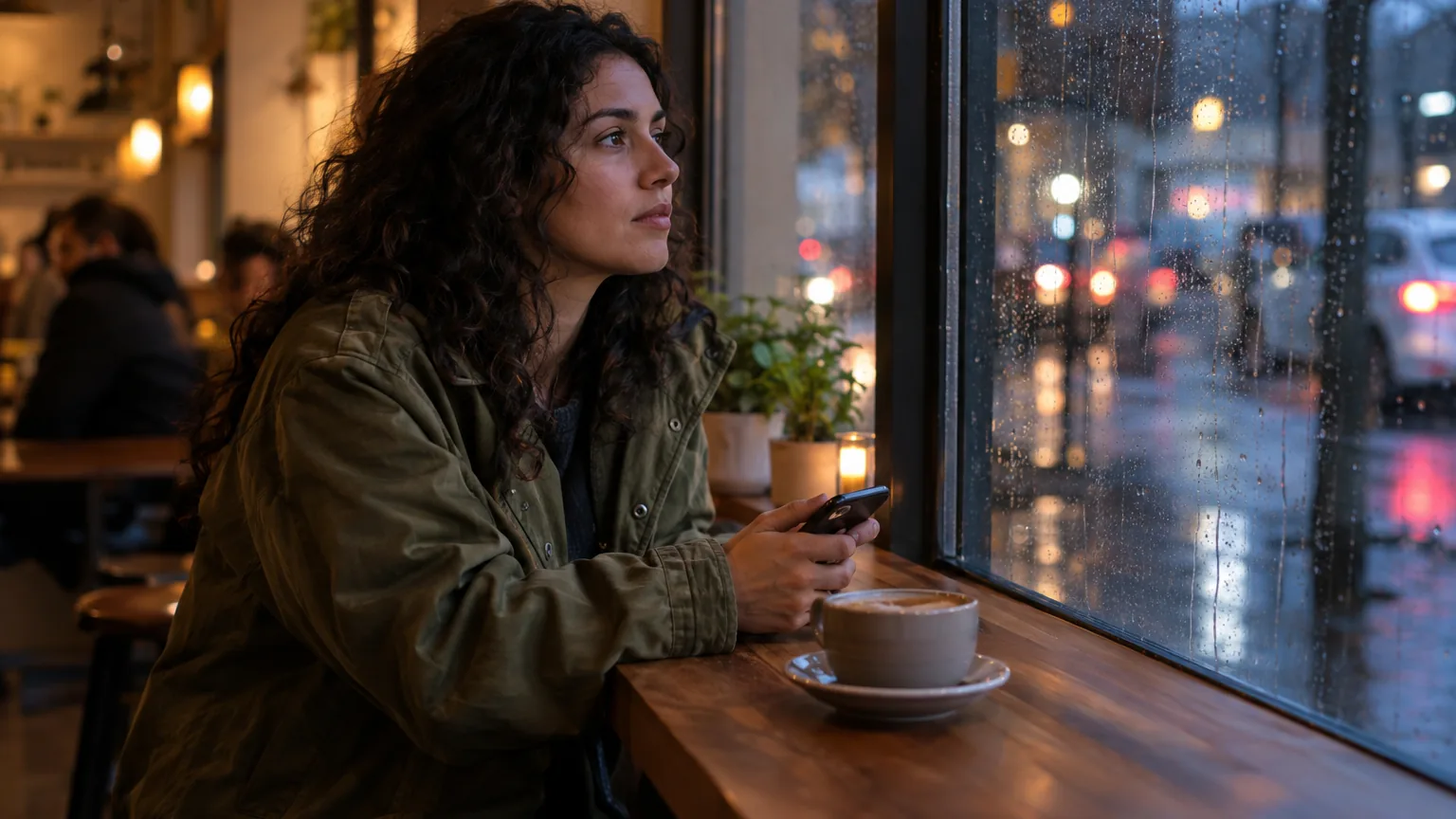
A 2025 meta-analysis of 83 studies with 55,440 people found that those who compare themselves more with others online report more concerns about their bodies, a correlation of 0.45 that the authors call moderate [7]. In the young adult study, negative comparison on social media went with more anxiety, loneliness and insomnia [6].
A feed is other people's best moments, chosen and lit. Your own life is the uncut version.

Sleep
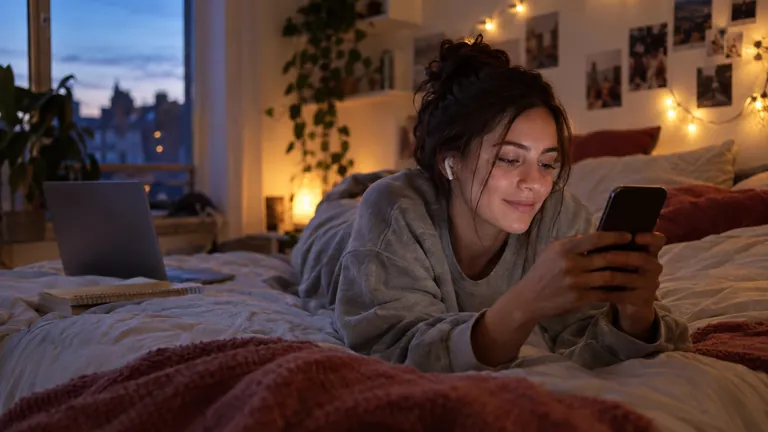
Scrolling in bed pushes sleep later, and short sleep drags mood down. In one study, half of 132 people limited Facebook, Instagram and Snapchat for a week. Compared with those who carried on as usual, their well-being improved a little, and better sleep quality explained part of the gain [8]. If the late-night scroll is your pattern, read about revenge bedtime procrastination.
Time taken from people
Social media is supposed to connect people, and sometimes it does. But in a national sample of 1,787 US adults aged 19 to 32, those in the top quarter for time on social media had twice the odds of feeling socially isolated as those in the bottom quarter, and the most frequent visitors had more than three times the odds [9]. That study was a snapshot, so loneliness may drive use as much as the reverse.
Where support comes from matters too. In a survey of 2,408 adults aged 18 to 30, emotional support from people face to face went with 43% lower odds of depression for each step up a five-point scale, while support found on social media went with 20% higher odds [10].

Use you can't control
The thread through all of it is compulsive use, the kind behind that 0.29 correlation [2]. Feeds are built to be hard to leave, as our guide to social media addiction explains. If you can't put yours down when you want to, that's the version worth changing.
Signs social media is hurting your mental health
Studies describe averages, and you're one person. These signs suggest your own use is costing you:
- You often feel worse after scrolling than before.
- You come away comparing your body, job or relationship with strangers'.
- It's the last thing you do at night, and you're sleeping later because of it.
- You open the apps when you're low, lonely or anxious, and close them feeling the same or worse.
- You've tried to cut back and drifted back within days.
- It's crowding out people you could actually see.
Two or three of these are a reason to change how you use it. They're not a diagnosis.
How to make social media easier on your mind
- Keep the people, mute the strangers. Messaging friends and joining a group you care about are different from scrolling strangers' highlights. Unfollow or mute the accounts that leave you comparing.
- Give it a daily budget. In the Penn trial, about 30 minutes a day was enough to reduce loneliness and depression [4]. A daily limit in Unrotten holds that budget for you: once it's used up, Apple's Screen Time shield locks the apps you chose until the day resets, with no "ignore limit" button.
- Protect the last hour. Charge your phone outside the bedroom, or keep your evenings free of the apps that keep you up. In Unrotten, the Calmer evenings goal gives you a protected window each evening without your rot apps.
- Run a one-week test. A week off is cheap, and the studies suggest it's long enough to notice a difference [5, 6]. Our guide to a social media detox walks you through one.
- Check how you feel after. For a week, ask yourself one question as you close the app: better, the same or worse? The answer tells you more about your own feeds than any average can.
When to get help
If low mood, anxiety or sleep problems last for weeks, whatever you think is behind them, a doctor or therapist can help. If you ever have thoughts of harming yourself, call or text 988, the Suicide & Crisis Lifeline in the US, at any hour.
Use it on purpose
Whether social media is bad for your mental health depends less on the app than on how you use it. Keep the parts that connect you, limit the parts that leave you comparing, and give your nights back to sleep. Then check in with yourself after a week.
Questions people ask
Is social media bad for your mental health?
Not for everyone, and only a little on average. Large studies find a weak link between time on social media and depression, but a stronger one for compulsive use and for comparing yourself with others. Trials in which people cut back find modest improvements in mood.
Why is social media bad for mental health?
When it is, it's mostly through comparison with other people's highlights, lost sleep, time taken from people you could see in person, and compulsive use that's hard to stop. Each has been linked to more symptoms of depression, anxiety or loneliness.
Does quitting social media improve mental health?
Often a little, sometimes more. A 2025 meta-analysis of 10 randomized trials found that limiting or pausing social media reduced depression symptoms by a small amount, and cutting back did at least as well as quitting. In one 2025 study, people with more symptoms at the start gained the most from a week off.
How much social media is too much?
There's no official limit for adults. In one trial, limiting three apps to 10 minutes each, about 30 minutes a day, reduced loneliness and depression within three weeks. A more personal test is how you feel after using it, and whether you can stop when you want to.
References
- Huang C. "Time Spent on Social Network Sites and Psychological Well-Being: A Meta-Analysis." Cyberpsychology, Behavior, and Social Networking. 2017;20(6):346-354. doi:10.1089/cyber.2016.0758 ↩
- Cunningham S, Hudson CC, Harkness K. "Social Media and Depression Symptoms: a Meta-Analysis." Research on Child and Adolescent Psychopathology. 2021;49(2):241-253. doi:10.1007/s10802-020-00715-7 ↩
- Lopes LS, Valentini JP, Monteiro TH, Costacurta MCF, Soares LON, Telfar-Barnard L, Nunes PV. "Problematic Social Media Use and Its Relationship with Depression or Anxiety: A Systematic Review." Cyberpsychology, Behavior, and Social Networking. 2022;25(11):691-702. doi:10.1089/cyber.2021.0300 ↩
- Hunt MG, Marx R, Lipson C, Young J. "No More FOMO: Limiting Social Media Decreases Loneliness and Depression." Journal of Social and Clinical Psychology. 2018;37(10):751-768. doi:10.1521/jscp.2018.37.10.751 ↩
- May W, Malouff JM, Meynadier J. "Reducing Social Media Use Decreases Depression Symptoms: A Meta-Analysis of Randomised Controlled Trials." European Journal of Investigation in Health, Psychology and Education. 2025;15(11):222. doi:10.3390/ejihpe15110222 ↩
- Calvert E, Cipriani M, Dwyer B, Lisowski V, Mikkelson J, Chen K, et al. "Social Media Detox and Youth Mental Health." JAMA Network Open. 2025;8(11):e2545245. doi:10.1001/jamanetworkopen.2025.45245 ↩
- Bonfanti RC, Melchiori F, Teti A, Albano G, Raffard S, Rodgers R, Lo Coco G. "The association between social comparison in social media, body image concerns and eating disorder symptoms: A systematic review and meta-analysis." Body Image. 2025;52:101841. doi:10.1016/j.bodyim.2024.101841 ↩
- Graham S, Mason A, Riordan B, Winter T, Scarf D. "Taking a Break from Social Media Improves Wellbeing Through Sleep Quality." Cyberpsychology, Behavior, and Social Networking. 2021;24(6):421-425. doi:10.1089/cyber.2020.0217 ↩
- Primack BA, Shensa A, Sidani JE, Whaite EO, Lin LY, Rosen D, et al. "Social Media Use and Perceived Social Isolation Among Young Adults in the U.S." American Journal of Preventive Medicine. 2017;53(1):1-8. doi:10.1016/j.amepre.2017.01.010 ↩
- Shensa A, Sidani JE, Escobar-Viera CG, Switzer GE, Primack BA, Choukas-Bradley S. "Emotional support from social media and face-to-face relationships: Associations with depression risk among young adults." Journal of Affective Disorders. 2020;260:38-44. doi:10.1016/j.jad.2019.08.092 ↩
Written by
Maren AshbyCOO, Unrotten
Maren Ashby is the COO of Unrotten, the iPhone app that helps people take their attention back from the feed. She writes about the research on phones, sleep and focus, and about the small, practical changes that make a phone easier to put down.