Blog/Social media & mental health/Explainer
Social Media and Body Image: Why Your Feed Gets Under Your Skin
What the experiments show about idealized photos, filters, selfies and comparison, and the changes that help you feel at home in your own body.

In this article
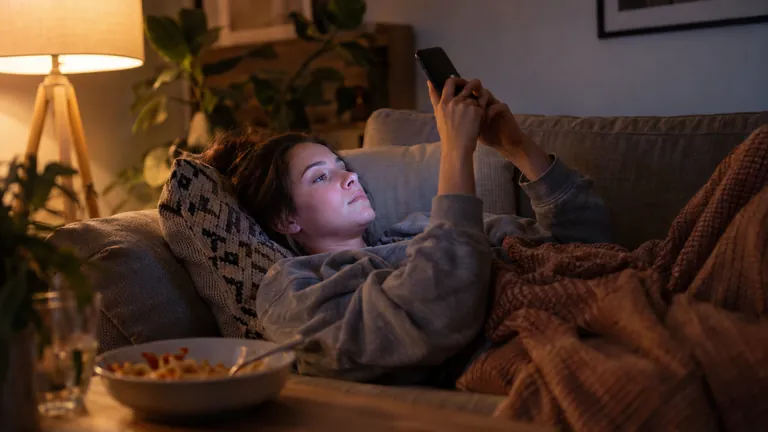
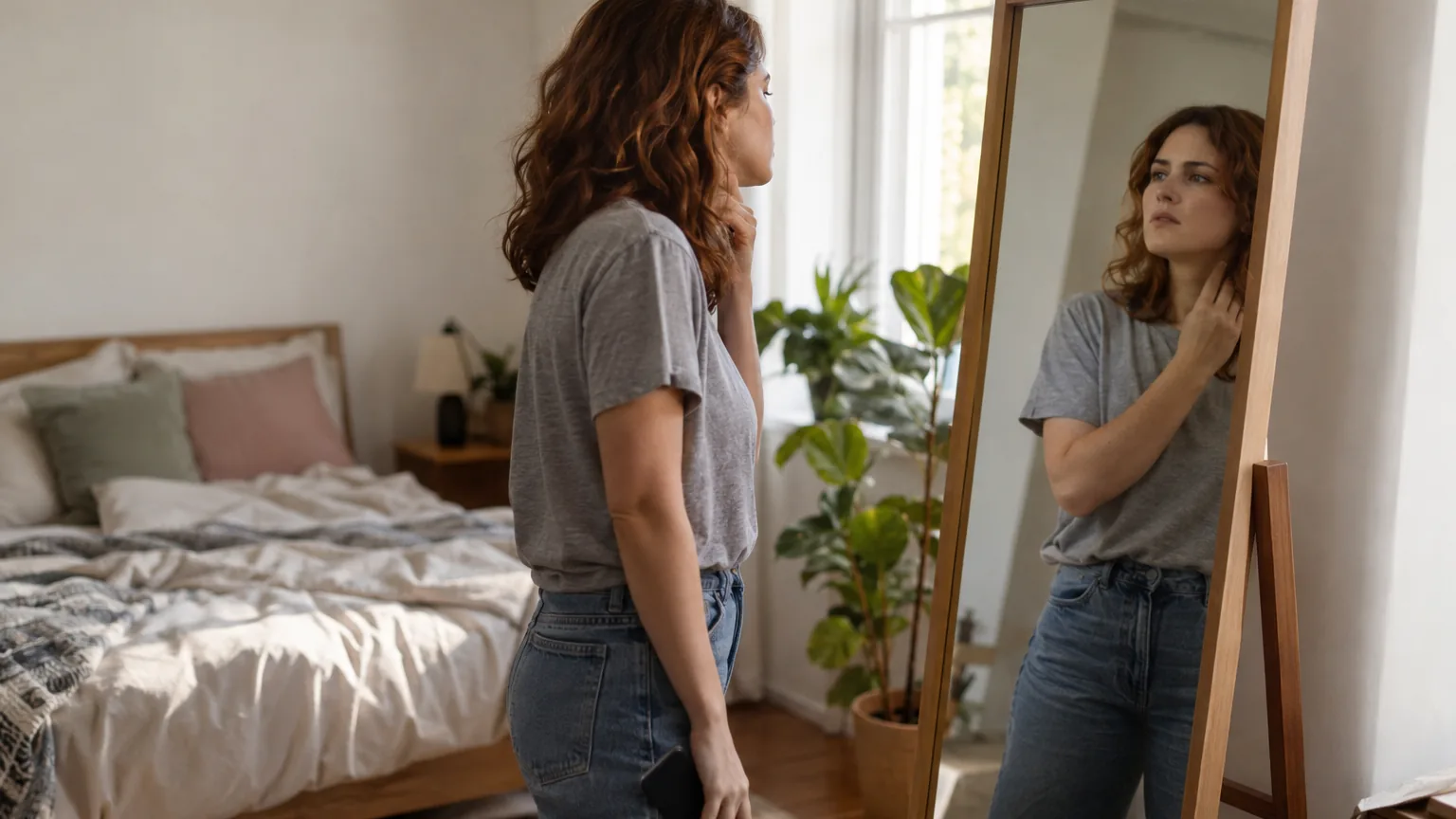
You open Instagram feeling fine and close it twenty minutes later pinching your waist, or turning side-on to the bathroom mirror. That shift is real, and researchers can measure it: in dozens of experiments, a few minutes of idealized photos left people feeling worse about their bodies. Here's what your feed does to your body image, why, and the changes that help most.
Does social media affect body image?
In the moment, clearly yes. Over the long run, less than the headlines suggest.
The best summary is a 2021 set of meta-analyses that pooled the experiments and long-term studies done so far [1]. Across 24 experiments with 3,816 people, looking at appearance-ideal images from social media, the toned, slim, flawless kind, had a moderate negative effect on how people felt about their bodies compared with looking at images that had nothing to do with appearance. Those images were also moderately more damaging than other appearance images on social media, and comments and captions could make them a little worse. Across 10 samples that followed 5,177 people over time, the link between social media use and later body image was negative but very small.
So a single session can sting, while the average effect over months is modest. Averages hide a lot, though, and some people are hit much harder than others.
Some of the experiments are easy to picture:
- Ten minutes on your own account. In one study, 112 young women were randomly assigned to spend 10 minutes on their own Facebook account, on a fashion magazine's website or on a neutral website. Facebook left them in a worse mood than the neutral site, and after Facebook, women who tend to compare their looks with other people's reported a bigger gap between how their face, hair and skin looked and how they wanted them to look [2].
- Fitspiration. Posts meant to inspire exercise and healthy eating can do the opposite of what they promise. In an experiment with 130 female students, viewing fitspiration images from Instagram led to more negative mood and more body dissatisfaction than viewing travel photos, and the effect ran through comparing themselves with the images [3].
- Men too. In a study of 118 Australian men aged 17 to 27, those who viewed more fitspiration on Instagram had taken on more of the muscular ideal and compared their looks more often. Those two things, in turn, went with less satisfaction with their bodies and with exercising more for appearance than for health [4].
Why your feed gets under your skin
Comparison does most of the work
Your feed is a stream of other people's bodies, and your brain can't help measuring yours against them. A 2025 meta-analysis of 83 studies with 55,440 people found that the more people compared themselves with others on social media, the more they worried about their bodies, a moderate link, and the more symptoms of disordered eating they reported [5]. People who compared more also had a less positive view of their bodies.
The comparison is rarely fair. The photos you see are chosen from many, taken in good light, posed and often edited, and feeds tend to favor the ones that drew the most attention.
Your feed shows other people's best angles. Your mirror shows you on an ordinary Tuesday.
A disclaimer doesn't protect you
You might think it's enough to be reminded that the pictures aren't the whole truth. One experiment tested that with 164 American women aged 18 to 25. Idealized images taken from social media made the women less satisfied with their bodies whether or not a disclaimer was attached to them, and the disclaimers didn't change their mood either [6]. The only thing the disclaimers changed was what the women thought of the person who posted the photos.
Your own selfies count too
Posting can hurt as well as browsing. In an experiment with 110 female students, women who took a selfie and posted it to social media felt more anxious, less confident and less physically attractive afterward than women who didn't. That happened even when they could retake the photo as many times as they liked and retouch it before posting [7].
The feed learns what you linger on
Recommendation feeds learn partly from what holds your attention. If you pause on bodies you compare yourself with, you'll likely be shown more of them, and the comparisons keep coming without you ever deciding to look for them.
What changes when people cut back
Experiments that change how much people scroll, or what they see, are the best evidence that the feed itself matters, and they point the same way.
- An hour a day for three weeks. In a Canadian trial, 220 university students aged 17 to 25 who used social media for at least two hours a day and had symptoms of anxiety or depression tracked their use for a week. Then half were asked to keep it to 60 minutes a day for three weeks. They cut their use roughly in half, to about 78 minutes a day against 188 in the group that carried on, and by the end they felt better about both their appearance and their weight. The other group saw no significant change, and the result held for men and women alike [8].
- A week off. In a smaller trial, 66 young women were randomly assigned to take a one-week break from social media or to keep using it. After the week, those who took the break reported higher body satisfaction and higher self-esteem, including how they felt about their appearance. The gain in body satisfaction was largest for women who had most taken the thin ideal to heart [9].
- A different feed. What you see matters too. In an experiment with 195 women aged 18 to 30, viewing body positive Instagram posts improved mood, body satisfaction and body appreciation compared with viewing thin-ideal or neutral posts [10]. One catch: both the body positive and the thin-ideal posts made the women think about their bodies more in terms of how they look, so a kinder feed works best alongside less time in it.
These were short trials, mostly with young women and students, and they can't say how long the lift lasts. But they suggest that the effect of feeds on body image is something you can change, not a fixed cost of being online.
Signs your feed is wearing down your body image
You can't measure an effect size on yourself, but you can notice patterns:
- You feel worse about your body after scrolling more often than you feel better.
- After a session, you check your reflection, suck in your stomach or look for flaws.
- You retake photos of yourself many times, or edit them, before you're willing to post.
- You follow accounts that make you feel your body needs to change.
- You choose workouts or meals to look like someone in your feed rather than to feel good.
A couple of these are a nudge to change how you use the apps; they aren't a diagnosis. Our guide to social media and mental health covers what feeds do to mood and sleep as well.
How to protect your body image without quitting
- Cut the time first. In the Canadian trial, an hour a day was enough to improve how young adults felt about their appearance and weight within three weeks [8]. Check your real number in Screen Time, then set a budget. A daily limit in Unrotten keeps it for you: once your time is used up, Apple's Screen Time shield locks the apps you chose until the day resets, with no "ignore limit" button to tap past.
- Audit who you follow. Scroll your following list and mute or unfollow every account that leaves you comparing. Add people with ordinary bodies of different shapes, ages and sizes, and accounts about things your body can do rather than how it looks. Body positive content helped in experiments [10].
- Catch the comparison as it happens. When you notice yourself measuring your body against a stranger's, name it: "comparing." Then close the app rather than arguing with the feeling.
- Post less, and retake less. If selfies leave you feeling worse, try a rule: one photo, no retakes, or no posting of your own body for a month [7].
- Try a week off. It's long enough to notice a difference [9]. Our social media detox guide walks you through one, and if Instagram is the hardest app to leave, read our guide to Instagram addiction.
- Move for how it feels. Choose exercise you enjoy and judge it by how you feel after, not how you look in the mirror. Unrotten's MindBattery™ recharges with workouts, sleep, mindful minutes and time away from the apps you choose, so the time you take back from the feed counts for something you can see.

When it's more than the feed
Changing your feed can ease the pressure, but it isn't a treatment. If thoughts about your body, food or weight take up much of your day, or you're restricting what you eat, bingeing or exercising to make up for eating, talk to a doctor or a therapist. Those are worth taking seriously, whatever part your phone plays.
Your body is not a post
A feed will always have someone thinner, stronger or more polished than you, because it's built from thousands of people's best moments. You can't win that comparison, but you can play it less often: less time in the feed, kinder accounts in it, and more of your day spent in the body you actually live in.
Questions people ask
Does social media affect body image?
In the moment, yes. In a meta-analysis of 24 experiments, looking at idealized images from social media had a moderate negative effect on how people felt about their bodies. Over months, the average link between social media use and body image was very small, and it's stronger for people who often compare themselves with others.
Why does social media make me feel bad about my body?
Mostly through comparison. Feeds show bodies that are posed, chosen and often edited, and in studies, people who compare themselves with others online more often report more worry about their bodies. Taking and posting your own selfies can add to it, even when you can retake and retouch them.
Does taking a break from social media improve body image?
In trials, yes, at least in the short term. Young women who took a one-week break reported higher body satisfaction than women who kept scrolling, and young adults who cut social media to an hour a day for three weeks felt better about their appearance and weight.
Is body positive content on social media good for you?
It seems to help more than idealized content. In one experiment, young women who viewed body positive Instagram posts felt better about their bodies than women who viewed thin-ideal or neutral posts. Both kinds of posts still kept attention on appearance, so spending less time in the feed matters too.
References
- de Valle MK, Gallego-García M, Williamson P, Wade TD. "Social media, body image, and the question of causation: Meta-analyses of experimental and longitudinal evidence." Body Image. 2021;39:276-292. doi:10.1016/j.bodyim.2021.10.001 · Read our plain-English summary ↩
- Fardouly J, Diedrichs PC, Vartanian LR, Halliwell E. "Social comparisons on social media: The impact of Facebook on young women's body image concerns and mood." Body Image. 2015;13:38-45. doi:10.1016/j.bodyim.2014.12.002 ↩
- Tiggemann M, Zaccardo M. "'Exercise to be fit, not skinny': The effect of fitspiration imagery on women's body image." Body Image. 2015;15:61-67. doi:10.1016/j.bodyim.2015.06.003 ↩
- Fatt SJ, Fardouly J, Rapee RM. "#malefitspo: Links between viewing fitspiration posts, muscular-ideal internalisation, appearance comparisons, body satisfaction, and exercise motivation in men." New Media & Society. 2019;21(6):1311-1325. doi:10.1177/1461444818821064 ↩
- Bonfanti RC, Melchiori F, Teti A, Albano G, Raffard S, Rodgers R, Lo Coco G. "The association between social comparison in social media, body image concerns and eating disorder symptoms: A systematic review and meta-analysis." Body Image. 2025;52:101841. doi:10.1016/j.bodyim.2024.101841 ↩
- Fardouly J, Holland E. "Social media is not real life: The effect of attaching disclaimer-type labels to idealized social media images on women's body image and mood." New Media & Society. 2018;20(11):4311-4328. doi:10.1177/1461444818771083 ↩
- Mills JS, Musto S, Williams L, Tiggemann M. "'Selfie' harm: Effects on mood and body image in young women." Body Image. 2018;27:86-92. doi:10.1016/j.bodyim.2018.08.007 ↩
- Thai H, Davis CG, Mahboob W, Perry S, Adams A, Goldfield GS. "Reducing social media use improves appearance and weight esteem in youth with emotional distress." Psychology of Popular Media. 2024;13(1):162-169. doi:10.1037/ppm0000460 ↩
- Smith OE, Mills JS, Samson L. "Out of the loop: Taking a one-week break from social media leads to better self-esteem and body image among young women." Body Image. 2024;49:101715. doi:10.1016/j.bodyim.2024.101715 · Read our plain-English summary ↩
- Cohen R, Fardouly J, Newton-John T, Slater A. "#BoPo on Instagram: An experimental investigation of the effects of viewing body positive content on young women's mood and body image." New Media & Society. 2019;21(7):1546-1564. doi:10.1177/1461444819826530 ↩
Written by
Maren AshbyCOO, Unrotten
Maren Ashby is the COO of Unrotten, the iPhone app that helps people take their attention back from the feed. She writes about the research on phones, sleep and focus, and about the small, practical changes that make a phone easier to put down.