

Blog/Explainer
Short Attention Span: Why It Happens and What Helps
Why you reread the same paragraph three times, the everyday habits that shorten your focus, and what to change first.

In this article
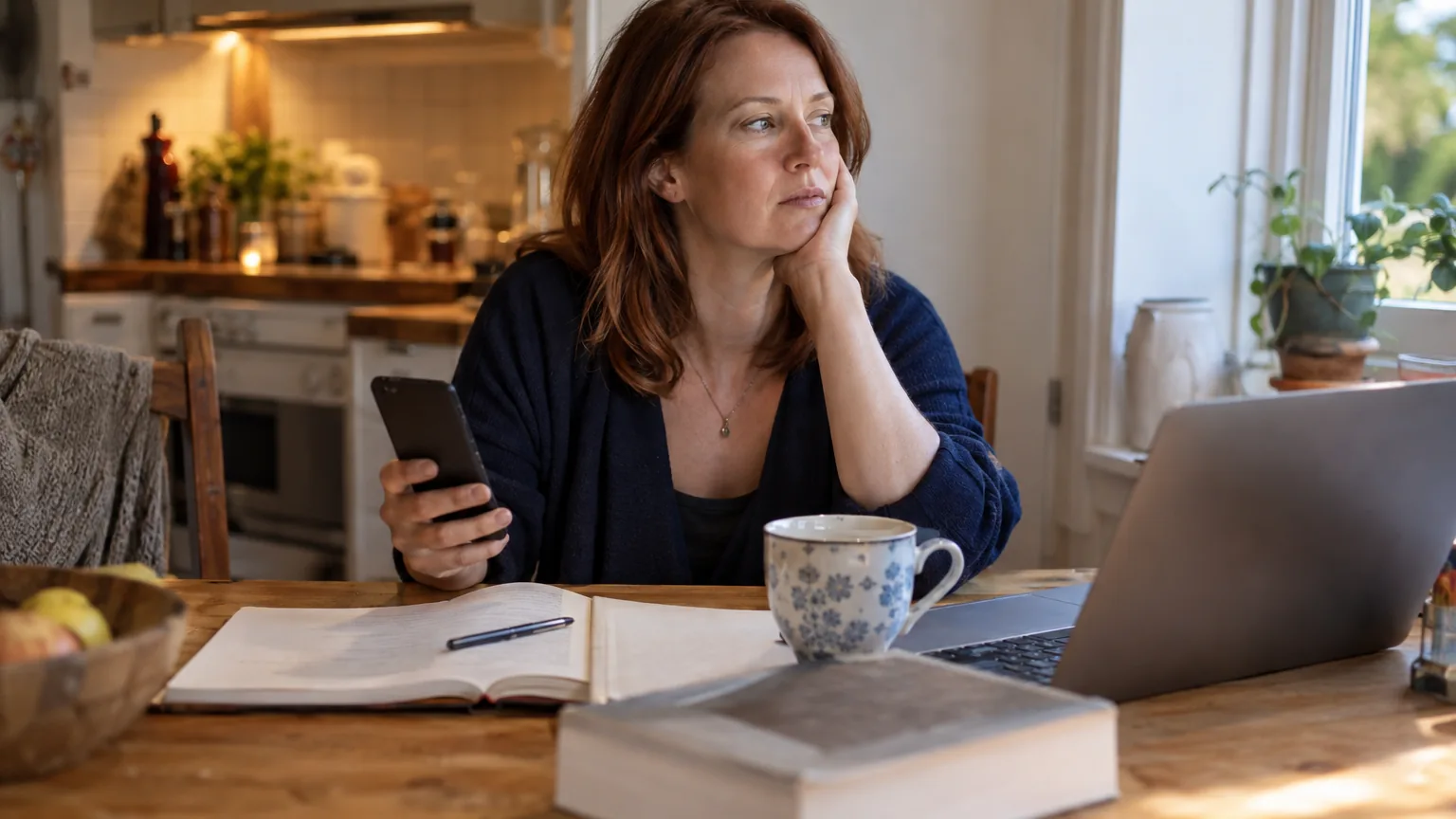
You read the same paragraph three times and still couldn't say what it said. A film doesn't feel finished without your phone in your hand, and a two-minute wait is long enough to open an app. It's easy to decide your attention span is simply short, the way some people are simply tall.
Most of the time it isn't a fixed trait. A short attention span is usually a reaction to how your days run: short nights, constant switching, interruptions and a phone that's never more than a reach away. Each of those can change. (Whether attention spans in general are shrinking, and where the famous goldfish figure came from, is covered in our guide to attention span.)
What a short attention span looks like
Attention isn't one thing you either have or don't. It changes with the task, with your sleep and with whatever is competing for it. Still, a short attention span tends to show up in the same places:
- You reread pages, emails and messages because the first pass didn't stick.
- You switch tabs, apps or tasks before you finish the one you're on.
- Every pause, a queue, an ad, a page loading, sends your hand to your phone.
- You lose the thread of conversations and meetings.
- Long things feel hard to start: a book, a film, a form, a job that needs an hour.
- You start a lot and finish little.
None of these is a diagnosis. They're what attention looks like when it's tired, interrupted or trained by habit to expect something new every few seconds, and which of those fits you best tells you where to start.
Why your attention span feels short
You're short on sleep
Attention is one of the first things to go when you're tired. A meta-analysis of 70 studies, covering 147 cognitive tests of people kept awake for up to two days, compared how much each mental ability suffered. Reasoning barely moved. The largest effect of all was on lapses in simple attention, the moments when your mind briefly goes blank [1].
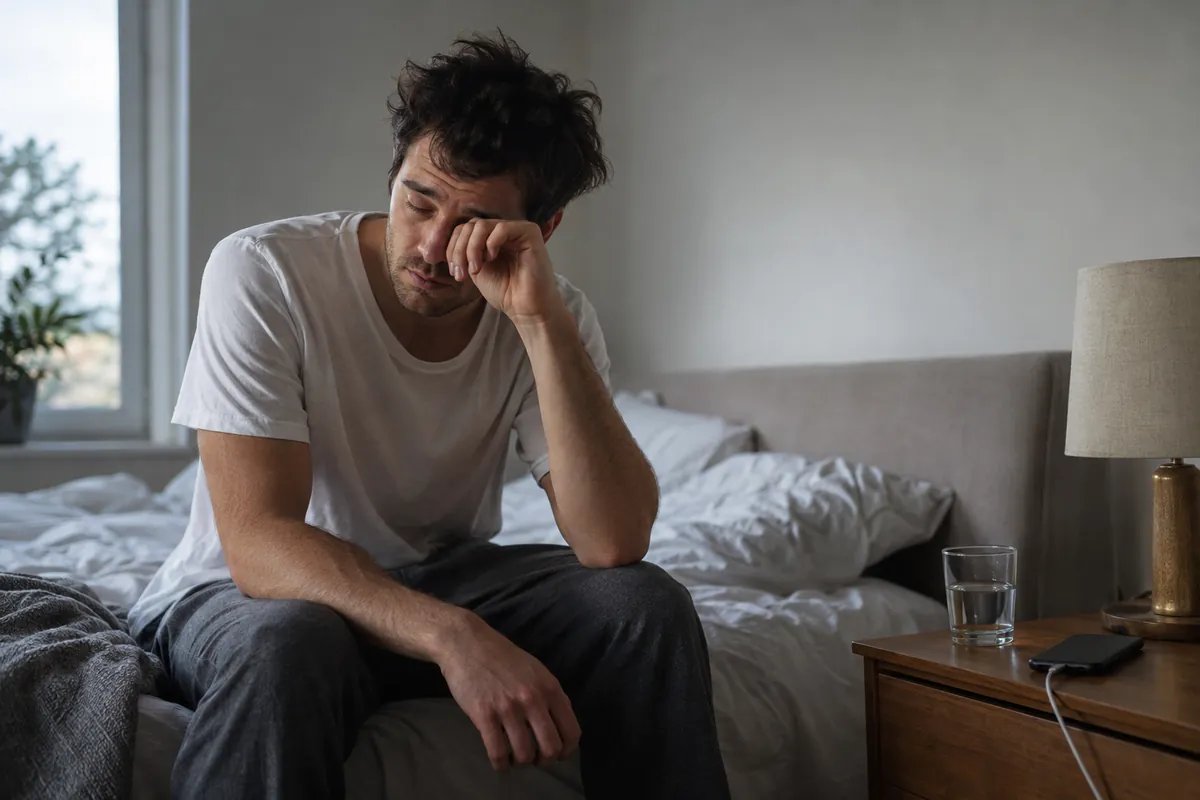
Those studies kept people up all night or longer, which is harsher than a short night, but they show which ability gives way first. After a short night, the focus you have the next day isn't a fair measure of the focus you have. And a last hour of scrolling can be what made the night short; our guide to revenge bedtime procrastination is about that hour.
Your days are one long switch
Media multitasking means using two or more media at once: scrolling while a show plays, answering messages while you read. In a study of 924 adults recruited through three different sources, people who multitasked more had poorer sustained attention, both by their own account and on a computer task that measured it directly. The link was moderate, a correlation of about 0.2, and pointed the same way in all three groups, though its strength varied between them [2].
The authors are careful about what that means. Multitasking may wear attention down, or people whose attention already wanders may multitask more; after more than a decade of research, they write, which comes first is still an open question [2].
Interruptions cost more than time
In a lab experiment, 48 people worked through a set of emails while a "supervisor" interrupted them by phone or instant message about every two minutes. Surprisingly, they finished the interrupted tasks faster than the uninterrupted ones, with no drop in quality. The cost showed up elsewhere: after only 20 minutes of interrupted work, they reported significantly more stress, frustration, time pressure and effort [3].
That's a scattered day in miniature. You keep up by rushing, and the rushing is what wears you out.
An alert doesn't even need an answer to cost you. In another experiment, college students doing a task that demanded steady attention made more errors once their phones started receiving notifications, though none of them picked up or checked a phone [4].
You check before anything asks you to
This cause is easy to miss. Researchers had 37 smartphone users wear small cameras that filmed their days from their own point of view, then went through the footage with them. Of the 1,130 times those people used their phones, 89% were started by the users themselves, not by a notification [5]. The study is small, but its conclusion is worth sitting with: most of the disruption comes from habits we've learned, not from the device.
Nine times out of ten, the phone didn't call you. You went to it.
Each check is short, and that's the trouble. Together they teach your hand to fill every gap, and the gaps are exactly where focus has to hold.
Your feeds change every few seconds
Short-video feeds hand you something new every few seconds, with no last page. A 2025 meta-analysis pooled 71 studies with 98,299 people and found that heavier use of short-form video went with poorer attention and poorer inhibitory control, the ability to stop yourself acting on an impulse [6]. Most of the studies were snapshots in time, so they can't show the videos caused the problem. Whichever way it runs, an evening of fifteen-second clips is poor practice for a chapter of a book.
You're under stress
Stress can feel a lot like a shrunken attention span. In a small study, 20 medical students were tested after a month of preparing for a major exam, alongside 20 matched peers under less stress. The stressed students did worse on a task that required shifting attention, and brain scans showed weaker connections in the network that handles those shifts. A month after the exam, they had caught up with the controls [7]. The hopeful part is the ending: the effect faded when the stress did.
When it's more than habit
If trouble focusing goes back to childhood and shows up everywhere, at work, at home and in conversation, or if it comes with low mood, anxiety or sleep problems that don't lift, talk to a doctor. Attention has other causes, ADHD among them, that new habits won't fix on their own, and a professional can help you sort out which is which.
What to change first
Some of the strongest evidence that attention comes back is a month-long randomized trial. Adults who blocked all mobile internet on their phones for two weeks, while calls and texts still worked, improved on an objective test of sustained attention, by about as much as it declines over ten years of aging, the authors estimate. They also spent more time with people in person, exercising and in nature [8].
You don't have to cut off the internet to use that. Start with the cause that sounds most like your week:
- Protect the night. Keep a regular bedtime and give the evening an end. In Unrotten, the Calmer evenings goal sets a protected window each evening when the apps you chose stay locked.
- Do one thing at a time. Pick one task, close everything else and set a timer for 25 minutes; stretch the blocks as they get easier. A phone-free Work, Focus or Reading session, started from the + on Unrotten's Home screen, keeps the apps you chose locked until it ends, with a countdown on your Lock Screen.
- Batch the interruptions. Turn off notifications from anything that isn't a person, and gather the rest into a few deliveries a day with Scheduled Summary (Settings, then Notifications).
- Make checking a decision. Since most pickups start with you, put some distance between the urge and the app: move the apps that pull hardest off your Home Screen, leave the phone in another room for work that matters, or cap how often you open them. Unrotten's Fewer app returns goal sets a daily number of opens for the apps you chose, and its shield locks them once you reach it.
- Give the feed an end. Short-video apps have no bottom, so set one: a daily cap or a session limit. Unrotten's Shorter scroll sessions goal gives the apps a break once a session runs past the length you set, and for the tools already on your phone, here's how to lock apps on iPhone.
- Walk outside, phone in your pocket. In two experiments, people did better on tests of directed attention after a walk in nature, or even after looking at pictures of nature, than after a city walk or city pictures. Nature holds your attention gently, the authors explain, which gives the effortful kind a chance to recover [9].

Give it two weeks
Pick one change and give it two weeks, the length of the trial's block [8]. Then watch for small signs: whether you finished a chapter, whether a queue still sends your hand to your pocket, whether you stayed with a whole meeting.
The checking habit was learned one pickup at a time, and it can be unlearned the same way. If you'd like help holding the line on tired days, Unrotten turns those goals into shields with no "ignore limit" button, plus an AI Coach that checks in on the plans you share with it.
Questions people ask
Why is my attention span so short?
Usually because of how your days run rather than something fixed in you. Short nights, constant switching between tasks and screens, interruptions, a habit of checking your phone in every pause, short-video feeds and stress all make it harder to stay with one thing, and each of them can change.
What does a short attention span mean?
It usually means you find it hard to stay with a task, a page or a conversation for as long as you'd like before your mind or your hand drifts elsewhere. It isn't one fixed number: how long anyone can focus depends on the task, how rested they are and what is competing for their attention.
Does your phone cause a short attention span?
It plays a part, though the research can't yet say how much. Heavier media multitasking and short-video use go with weaker attention in large studies, and in a randomized trial, blocking mobile internet for two weeks improved sustained attention. People who already struggle to focus may also be drawn to their phones more.
Can you fix a short attention span?
When everyday habits are behind it, it often improves. Sleep enough, work on one thing at a time, batch your notifications, make checking your phone a decision rather than a reflex, put limits on short-video feeds and spend time outdoors. Give one change two weeks before you judge it.
When should I see a doctor about a short attention span?
If trouble focusing goes back to childhood and shows up in every part of your life, or comes with low mood, anxiety or sleep problems that don't lift, talk to a doctor. Attention has causes that a change of habits won't fix on its own.
References
- Lim J, Dinges DF. "A meta-analysis of the impact of short-term sleep deprivation on cognitive variables." Psychological Bulletin. 2010;136(3):375-389. doi:10.1037/a0018883 ↩
- Rioja K, Cekic S, Bavelier D, Baumgartner SE. "Unraveling the link between media multitasking and attention across three samples." Technology, Mind, and Behavior. 2023;4(2):134-150. doi:10.1037/tmb0000106 ↩
- Mark G, Gudith D, Klocke U. "The cost of interrupted work: more speed and stress." Proceedings of the SIGCHI Conference on Human Factors in Computing Systems. 2008:107-110. doi:10.1145/1357054.1357072 ↩
- Stothart C, Mitchum A, Yehnert C. "The attentional cost of receiving a cell phone notification." Journal of Experimental Psychology: Human Perception and Performance. 2015;41(4):893-897. doi:10.1037/xhp0000100 ↩
- Heitmayer M, Lahlou S. "Why are smartphones disruptive? An empirical study of smartphone use in real-life contexts." Computers in Human Behavior. 2021;116:106637. doi:10.1016/j.chb.2020.106637 ↩
- Nguyen L, Walters J, Paul S, Monreal Ijurco S, Rainey GE, Parekh N, et al. "Feeds, feelings, and focus: A systematic review and meta-analysis examining the cognitive and mental health correlates of short-form video use." Psychological Bulletin. 2025;151(9):1125-1146. doi:10.1037/bul0000498 ↩
- Liston C, McEwen BS, Casey BJ. "Psychosocial stress reversibly disrupts prefrontal processing and attentional control." Proceedings of the National Academy of Sciences. 2009;106(3):912-917. doi:10.1073/pnas.0807041106 ↩
- Castelo N, Kushlev K, Ward AF, Esterman M, Reiner PB. "Blocking mobile internet on smartphones improves sustained attention, mental health, and subjective well-being." PNAS Nexus. 2025;4(2):pgaf017. doi:10.1093/pnasnexus/pgaf017 ↩
- Berman MG, Jonides J, Kaplan S. "The cognitive benefits of interacting with nature." Psychological Science. 2008;19(12):1207-1212. doi:10.1111/j.1467-9280.2008.02225.x ↩
Written by
Maren AshbyCOO, Unrotten
Maren Ashby is the COO of Unrotten, the iPhone app that helps people take their attention back from the feed. She writes about the research on phones, sleep and focus, and about the small, practical changes that make a phone easier to put down.