
Blog/Explainer
Dopamine Addiction: Can You Really Be Addicted to Dopamine?
Nobody is hooked on a molecule. What the phrase gets right about phones and feeds, what it gets wrong, and what actually loosens the pull.


In this article
You can't be addicted to dopamine. It's a chemical your brain makes all day, and you need it to move, to learn and to want anything at all. But the feeling people mean when they say "dopamine addiction" is real: the tug back to the phone, the reach at every red light, the scroll that keeps going long after it stopped being fun.
Here's what dopamine actually does, why a feed pulls so hard, and what loosens its grip.
Can you be addicted to dopamine?
Not in any literal sense. Dopamine is a neurotransmitter, one of the messengers brain cells use to signal each other. Your brain releases it around a good meal, a text from a friend, the first sip of coffee. Being addicted to it would be a little like being addicted to your own pulse.
There's also no diagnosis called dopamine addiction. The phrase is shorthand for being hooked on things that deliver quick rewards: a feed, notifications, games, "cheap dopamine" in internet slang. Even for phones, researchers disagree about the word addiction. A 2018 review concluded that the evidence didn't yet support smartphone addiction as a true addiction, and suggested calling it problematic use instead [1]. Other researchers have warned that labeling everyday pastimes as addictions risks turning ordinary life into a disorder [2].
That doesn't make the pull imaginary. It means that for most people, the fix is changing a habit, not treating a disease.
What dopamine really does: wanting, not liking
The popular story says dopamine is the brain's pleasure chemical. The research tells a different story.
In a classic series of experiments, Kent Berridge and Terry Robinson depleted rats of up to 99% of the dopamine in two of the brain's reward areas. The rats still reacted with pleasure to sugar and with disgust to bitter quinine, and they could still learn new likes and dislikes. The researchers concluded that dopamine is needed for "wanting" a reward, not for "liking" it [3]. Later work found that wanting is generated by a large, spread out system in the brain, while liking comes from a few small "hot spots", and that the dopamine system may not generate pleasure after all [4].
Dopamine also teaches. Neurons that release it fire in a pattern that tracks surprise: their output signals errors in the brain's predictions of rewards, when something turns out better or worse than expected, and that's how the brain learns what's worth coming back to [5].
Put those together and you get a better picture. Dopamine is less about the pleasure of what you find and more about the urge to look.
The pull lives in the wanting. The scroll itself is often not much fun.
That's why the reach for your phone can feel urgent while the scrolling feels flat.
Why your phone feels like a dopamine addiction
Rewards you can't predict
Most posts in a feed are fine, a few are great, and you never know which swipe brings the next good one. A reward you didn't see coming is exactly the kind of event those learning signals respond to [5].
Social media also hands out social rewards. A 2021 study analyzed over one million posts from more than 4,000 people across several platforms and found that their posting followed the rules of reward learning: people spaced their posts in a way that maximized the likes they collected over time. An online experiment with 176 people, built to mimic a social platform, showed that the likes themselves changed behavior [6].
Cues everywhere
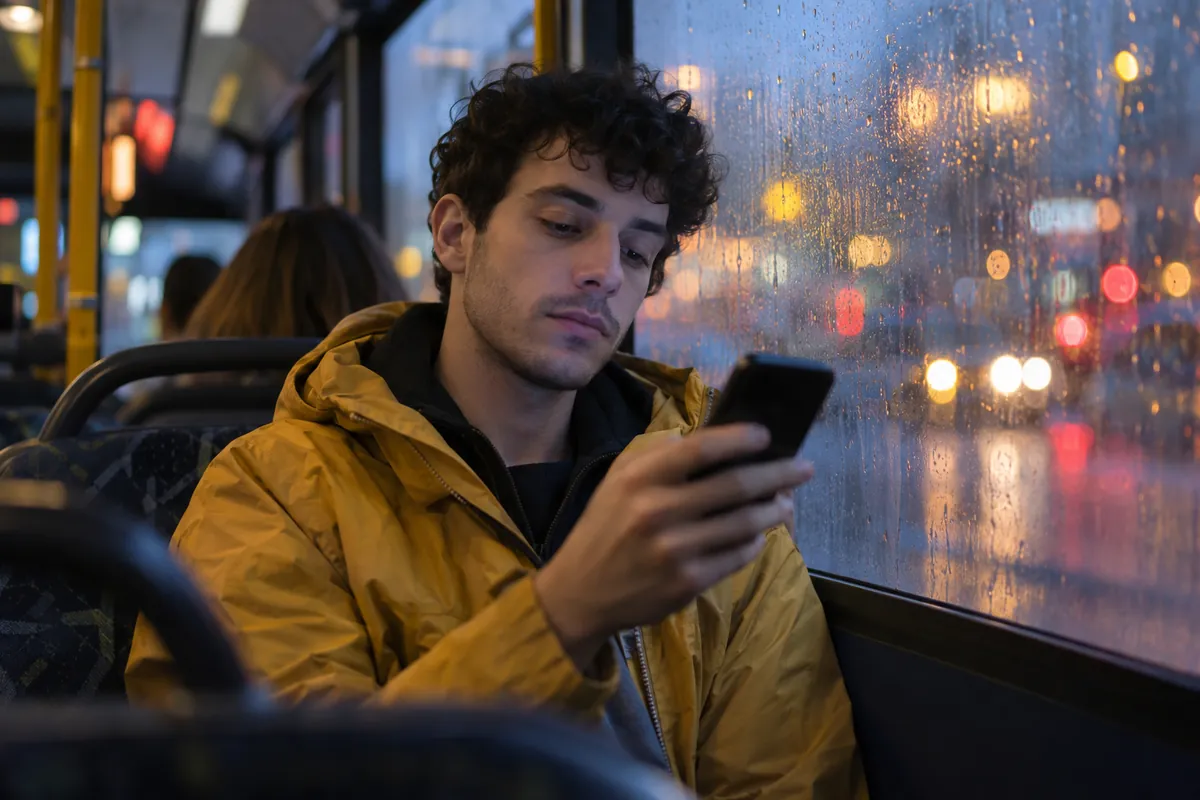
Habits run on cues, and a phone is full of them: a buzz, a lit screen, a red badge, a minute of waiting. In three studies, researchers found that smartphone use is shaped by checking habits, brief and repeated looks at content that's always one tap away. Those habits were reinforced by small informational rewards that arrive almost instantly, and a quick check sometimes led people on to other things on the phone. Interestingly, the people studied described their repetitive checking as more of an annoyance than an addiction [7].
Wanting can outrun liking
Because wanting and liking run on different systems [3, 4], they can drift apart. You can keep wanting to scroll after you've stopped enjoying it. That gap, wanting without liking, is what many people are describing when they call their phone habit a dopamine addiction.
Signs your phone habit is running on autopilot
There's no official list of dopamine addiction symptoms, because it isn't a medical condition. But these are the signs people usually mean, and each is worth noticing:
- You open an app before you've decided to.
- You keep scrolling after it stopped being enjoyable.
- Any pause, a queue, an elevator, a red light, sends your hand to your pocket.
- The phone is the first thing you touch in the morning and the last at night.
- You've tried to cut back and drifted back within days.
- Time you meant for sleep, people or work keeps going to the feed.
If a few of these sound familiar, you're in large company, and the habit can be changed. If heavy phone use comes with low mood, anxiety or sleep problems that don't lift, a doctor or therapist can help.
How to loosen the pull
Skip the dopamine reset
You don't need to lower, fast or reset your dopamine. Your brain isn't a cup that overflows. As our guide to the dopamine detox explains, what a "reset" really changes is your habits, and you can change those directly. A day without your phone can feel wonderful, but if the cues and the easy access are still waiting when you get it back, so is the pull.
Remove the cues
Checking habits feed on easy access [7]. Turn off notifications for everything that isn't a person, and move the apps that pull hardest off your Home Screen, or into a folder on the last page. Every cue you remove is one less reminder to want.
Put a limit between you and the feed
Willpower is weakest exactly when the pull is strongest: late at night, tired, bored. So decide once, while you're calm, and let something else hold the line. With a daily limit in Unrotten, the apps you choose lock with Apple's Screen Time shield once your time for the day is used up, and stay locked until the day resets. The shield screen has no "ignore limit" button, so the decision you made calmly isn't one tap away from being undone. The Shorter scroll sessions goal does the same for a single binge: past the session length you set, the apps take a break before they open again.
Guard the first and last hour
Two moments deserve special protection: the minutes after you wake and the ones before you sleep, when the phone is the easiest thing in reach and you have the least resistance. Charge it outside the bedroom, use a plain alarm clock, and keep the first half hour of the morning for something that isn't a screen. In Unrotten, the Mornings for yourself and Calmer evenings goals each protect a window of the day without the apps you chose.
Cut back, not only quit
You don't have to quit cold. In a 2018 experiment, 143 university students were randomly assigned either to limit Facebook, Instagram and Snapchat to 10 minutes per platform per day or to use them as usual, for three weeks. The limited group showed significant drops in loneliness and depression compared with the others [8]. It was one study of students, but it suggests that much less, rather than none at all, can be enough.
Give the wanting somewhere to go
Cravings fill empty space. Plan a few things you'd rather do when the urge hits: a walk, a call, ten pages of a book, a stretch. Our guide to building a dopamine menu has fifty ideas.

It helps to see the trade. Unrotten's MindBattery is a score from 0 to 100 on your Lock Screen and in the Dynamic Island: it drains while you use the apps you chose and recharges with sleep, movement, mindful minutes and time away from them. And when your scrolling runs fast, Unrotten's Coach sends a nudge, and it checks in on the plans you share with it.
Want less, and enjoy more
Calling it dopamine addiction makes the problem sound chemical and the solution sound drastic. The truth is more hopeful. The pull you feel is learned, it's strongest where cues are thickest, and it weakens when the cues go quiet and the feed stops being the easiest thing within reach.
Start with the app that pulls hardest. Turn off its notifications tonight, give it a daily limit tomorrow, and see how a week feels. The first days can feel twitchy. That reach for a phone that isn't there is the habit announcing itself, and it gets quieter each time you let it pass. For the bigger picture of how phone habits form and how to break them, our guide to phone addiction goes further.
Questions people ask
Can you be addicted to dopamine?
No. Dopamine is a chemical messenger your brain makes all day, and you need it to move, learn and want things. There is no diagnosis called dopamine addiction. People use the phrase for the pull of quick rewards, like a feed or notifications, and that pull is real: it's a learned habit, and habits can be changed.
What are the signs of dopamine addiction?
Because it isn't a medical condition, there's no official list. The signs people usually mean are habits on autopilot: opening an app before deciding to, scrolling long after it stopped being fun, reaching for the phone at every pause, and drifting back after trying to cut down.
Is social media a dopamine addiction?
Social media taps the brain's reward learning. A 2021 study of over a million posts found that people post in the pattern reward learning predicts, as if chasing likes. But researchers still debate whether heavy use counts as an addiction, and many prefer the term problematic use.
How do you break a dopamine addiction?
You don't need to lower or reset your dopamine. What works is changing the habit: turn off the cues that trigger checking, put a firm limit between you and the apps that pull hardest, cut back rather than only quitting, and plan what you'll do instead.
References
- Panova T, Carbonell X. "Is smartphone addiction really an addiction?" Journal of Behavioral Addictions. 2018;7(2):252-259. doi:10.1556/2006.7.2018.49 ↩
- Billieux J, Schimmenti A, Khazaal Y, Maurage P, Heeren A. "Are we overpathologizing everyday life? A tenable blueprint for behavioral addiction research." Journal of Behavioral Addictions. 2015;4(3):119-123. doi:10.1556/2006.4.2015.009 ↩
- Berridge KC, Robinson TE. "What is the role of dopamine in reward: hedonic impact, reward learning, or incentive salience?" Brain Research Reviews. 1998;28(3):309-369. PMID: 9858756 ↩
- Berridge KC, Kringelbach ML. "Pleasure systems in the brain." Neuron. 2015;86(3):646-664. doi:10.1016/j.neuron.2015.02.018 ↩
- Schultz W, Dayan P, Montague PR. "A neural substrate of prediction and reward." Science. 1997;275(5306):1593-1599. doi:10.1126/science.275.5306.1593 ↩
- Lindström B, Bellander M, Schultner DT, Chang A, Tobler PN, Amodio DM. "A computational reward learning account of social media engagement." Nature Communications. 2021;12:1311. doi:10.1038/s41467-020-19607-x ↩
- Oulasvirta A, Rattenbury T, Ma L, Raita E. "Habits make smartphone use more pervasive." Personal and Ubiquitous Computing. 2012;16(1):105-114. doi:10.1007/s00779-011-0412-2 ↩
- Hunt MG, Marx R, Lipson C, Young J. "No More FOMO: Limiting Social Media Decreases Loneliness and Depression." Journal of Social and Clinical Psychology. 2018;37(10):751-768. doi:10.1521/jscp.2018.37.10.751 ↩
Written by
Maren AshbyCOO, Unrotten
Maren Ashby is the COO of Unrotten, the iPhone app that helps people take their attention back from the feed. She writes about the research on phones, sleep and focus, and about the small, practical changes that make a phone easier to put down.